

Best RV Essentials for Beginners (First Trip Checklist)
Buying your first rig is an absolute thrill; however, staring at those empty cabinets and wondering what you actually need to survive your first night can feel incredibly overwhelming. In the excitement of planning your first route, it is easy to suffer from analysis paralysis. In fact, beginners often forget important things like water regulators or sewer adapters, assuming a standard garden hose will do the job. Skipping these items can, as a result, turn a dream vacation into a costly camping disaster.
Meanwhile, the internet is flooded with massive, chaotic shopping lists telling you to buy everything under the sun. On the other hand, we believe in keeping your maiden voyage simple, safe, and stress-free. This curated checklist simplifies the process by cutting out the fluff and focusing strictly on what matters. Additionally, investing in the right gear upfront protects your plumbing, your electrical systems, and your peace of mind.
Most importantly, remember that every seasoned traveler started exactly where you are standing right now. We have tested the gear, made the rookie mistakes, and figured out the hard way what truly belongs in your setup. Ready to hit the road with confidence? Let’s dive into the absolute non-negotiable RV essentials for beginners.
RV Beginners Checklist: The Ultimate “First Trip” Essentials
If you are standing in the aisle of a camping store right now, use this quick summary list to ensure you have the absolute non-negotiables before you head to the checkout counter.
| Category | Essential Gear Item | Why It Matters |
| Fresh Water |
• RV-Safe Drinking Water Hose
• Water Pressure Regulator
• Inline Water Filter |
Prevents toxic water contamination and stops high pressure from bursting your interior pipes. |
| Power |
• Surge Protector / EMS
• Dogbone Adapters (30/50 Amp) |
Saves your expensive appliances from faulty campground wiring and ensures you can plug in anywhere. |
| Sewer |
• Heavy-Duty Sewer Hose
• Clear Elbow Adapter
• Holding Tank Treatments |
Keeps waste flowing smoothly, prevents clogs, and eliminates terrible odors inside the rig. |
| Setup & Safety |
• Leveling Blocks & Wheel Chocks
• Well-Stocked First Aid Kit
• Basic RV Tool Kit |
Keeps your RV stable, secures the rig from rolling, and ensures you can handle minor injuries or medical tweaks far from home. |
| Camp Comfort |
• Durable Camping Chairs
• Outdoor Patio Mat |
Most of your RV memories happen outside the rig; high-quality chairs are essential for relaxing by the fire without back pain. |
Why a Standard Band-Aid Box Won’t Cut It
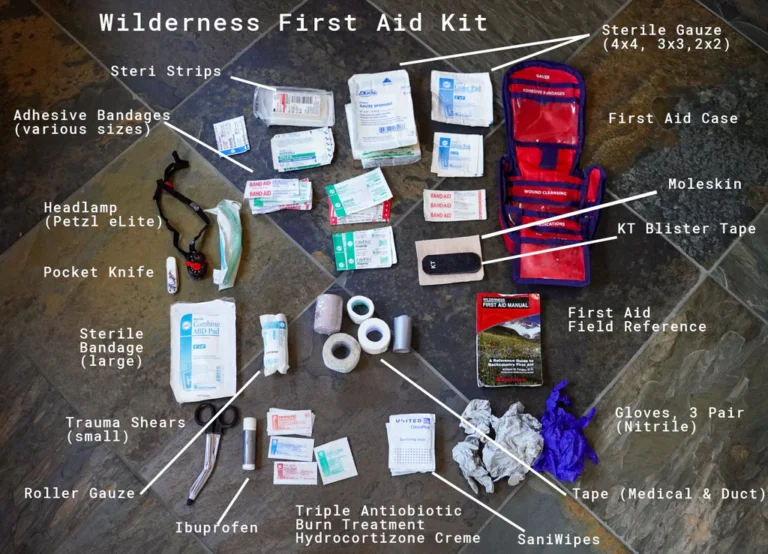
When you are camping, you are often miles away from the nearest pharmacy or urgent care. In fact, minor mishaps like blisters from hiking, small burns from the campfire, or cuts from adjusting your hitch are incredibly common. As a result, having a dedicated, well-stocked medical kit inside your rig is an absolute non-negotiable for peace of mind.
Most importantly, make sure your kit is stored in a highly accessible spot that everyone in the family knows about—not buried at the bottom of an outdoor storage bay!
Pro Tip: Bookmark this page on your phone! When you are packing up your rig for your maiden voyage, you can use this table as a final walkthrough checklist.
The Core Essentials: What Happens Without Them & What to Buy
Staring at a wall of gear at a camping store is overwhelming. To simplify your shopping trip, we have broken down the absolute non-negotiables. Here is exactly why you need them, the disasters that happen if you skip them, and the exact items to add to your cart.
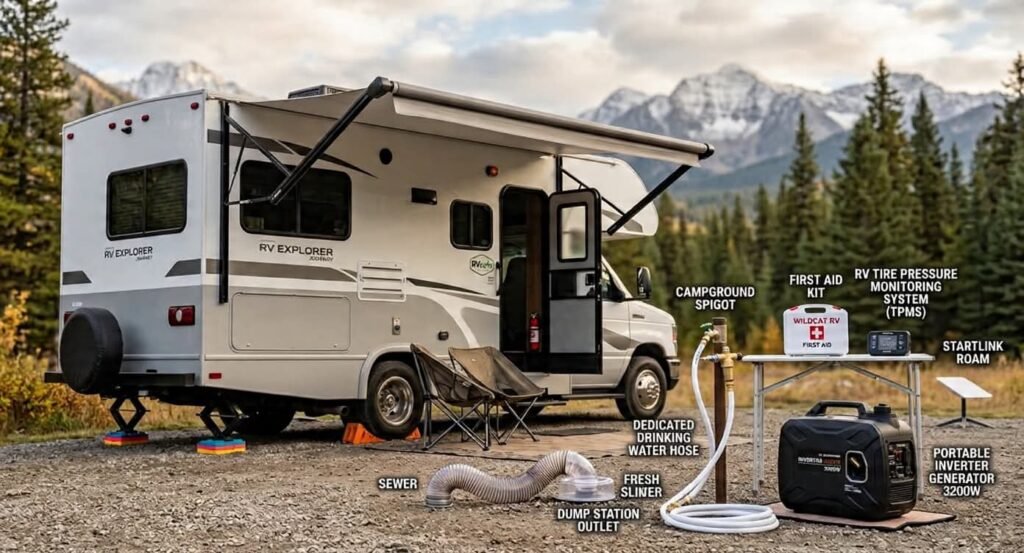
1. Fresh Water Protection
If you don’t control the water entering your RV, you risk destroying your plumbing or getting violently ill.
The Nightmare (Without One): You hook up to a campground with massive, unregulated water pressure. Midnight hits, and the extreme pressure blows apart the cheap plastic water lines hidden behind your RV shower. You wake up to a flooded rig and thousands of dollars in water damage.
The Beginner Mistake: Buying a standard green garden hose. These hoses leach lead, chemicals, and a terrible rubber taste into your drinking water.
The Solution & Shopping List:
High-Flow Brass Water Pressure Regulator: Automatically keeps campground pressure at a safe 45–55 PSI.
Heavy-Duty RV Drinking Water Hose: Lead-free, BPA-free, and UV-stabilized so your water stays safe and fresh.
Inline Carbon Water Filter:Removes sulfur, chlorine, sediment, and bad odors from campground spigots.
2. The Electrical Guard (Surge Protector & EMS)
Your RV is a rolling house filled with sensitive electronics like your air conditioner, microwave, and fridge.
-
The Nightmare (Without One): A sudden summer thunderstorm hits the campground. A lightning strike or a faulty campground pedestal sends a massive electrical surge into your rig. Without protection, your expensive appliances are instantly fried, leaving you stranded in the heat.
-
The Beginner Mistake: Assuming a cheap $20 power strip from home will protect an entire RV. It won’t.
-
The Solution & Shopping List:
-
Smart RV Surge Protector & EMS (30-Amp or 50-Amp): Constantly analyzes campground power and cuts off electricity completely if it detects dangerous voltage drops or surges.
-
Dogbone Adapter Electrical Power Converters: Allows you to plug your 30-amp rig into a 50-amp pedestal (or vice versa) safely.
-
3. The Sewer System (The “Stinky Slinky”)
Managing your waste tanks is the least glamorous part of RVing, but doing it wrong will ruin your entire trip.
The Nightmare (Without One): You buy a cheap, flimsy sewer hose. While dumping your black tank, the hose splits open under pressure, spilling raw sewage all over your shoes and the campsite.
The Beginner Mistake: Leaving your black tank valve open while hooked up at a campground. This drains the liquid but leaves the solids behind, creating a rock-hard clog known in the RV community as the dreaded “poop pyramid.”
The Solution & Shopping List:
Heavy-Duty 15-Foot Sewer Hose Kit: Look for one with a thick, puncture-resistant material.
Clear 90-Degree Sewer Elbow Adapter: Attach this to the campground dump station so you can visually see when your tanks are running completely clean.
Enzyme-Based Holding Tank Treatments: Breaks down solids and completely eliminates terrible odors inside your RV bathroom.
4. Safety First: TPMS, First Aid, and Fire Safety
When you are moving a 10,000-pound home down the highway, safety cannot be an afterthought.
-
The Nightmare (Without One): An RV tire slowly loses air while you are driving at 65 MPH. Because the tire gets too hot, it suffers a catastrophic blowout, ripping through your RV’s wheel well and causing you to lose control of the steering wheel.
-
The Beginner Mistake: Relying on the cheap, tiny plastic fire extinguisher that came stock with the RV. Those usually only last for about 8 seconds of spray time.
-
The Solution & Shopping List:
-
Tire Pressure Monitoring System (TPMS): Solar-powered sensors that screw onto your tire valves, giving you real-time pressure and temperature alerts on your dashboard while driving.
-
Certified Wilderness First Aid Kit: Packed with trauma shears, heavy gauze, burn gel, and medications for campground emergencies.
-
Class B/C Heavy-Duty Fire Extinguisher: A larger, reliable extinguisher meant specifically for handling grease, fuel, or electrical fires.
-
5. Setup & Camp Comfort
Once you safely arrive and park, you need to stabilize your rig so you can actually relax.
-
The Nightmare (Without One): You park on uneven ground without leveling blocks. Your fridge struggles to run (RV fridges must be level to operate safely), your camper rocks violently every time someone takes a step, and you spend the night rolling to one side of the bed.
-
The Beginner Mistake: Buying cheap, flimsy plastic chairs that break after two weekends outside, leaving you sitting on the dirt.
-
The Solution & Shopping List:
-
Interlocking Leveling Blocks & Heavy-Duty Wheel Chocks: To easily level your tires and lock your rig safely in place so it cannot roll.
-
Ergonomic, Heavy-Duty Camping Chairs: Look for rust-resistant frames and breathable mesh so you can sit by the campfire in total comfort.
-
6. RV Kitchen & Cooking Essentials
Cooking in an RV is a beautiful experience; however, doing it in a kitchen the size of a closet presents unique challenges. If you try to pack your home kitchen into an RV, you will quickly run out of room and patience.
-
The Nightmare (Without One): You open your RV cabinets after a long drive, only to have heavy ceramic mugs and glass storage containers tumble out, shattering all over your floor. Meanwhile, your tiny counters are so cluttered with a standard coffee maker and bulky bowls that you don’t even have room to chop an onion.
-
The Beginner Mistake: Bringing full-sized, heavy household cookware. Standard pots and pans rattle loudly while driving, take up way too much space, and add unnecessary weight to your rig.
-
The Solution & Shopping List:
-
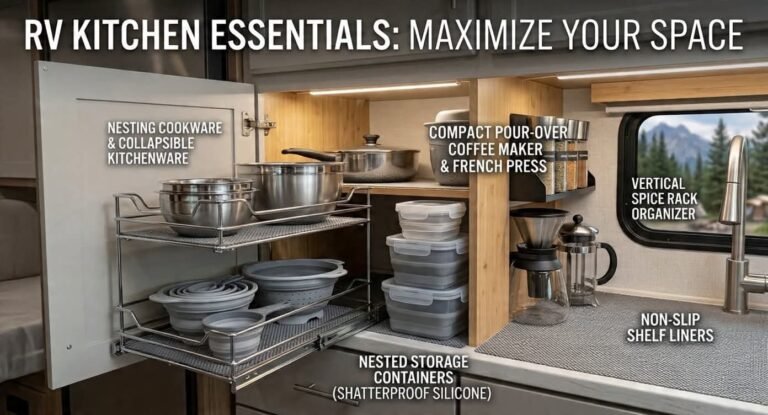
Collapsible Pour-Over Coffee Maker or French Press: Ditch the bulky electric machine. A collapsible silicone coffee maker folds completely flat into a drawer and doesn’t require electricity to brew a perfect morning cup.
-
Nesting Bowls & Collapsible Measuring Cups: Look for sets where everything snaps together into one neat pile. This saves up to 70% of your cabinet space.
-
Unbreakable Silicone or Plastic Food Storage Containers: Lightweight, stackable, and guaranteed not to shatter when you hit a pothole on the highway.
-
Non-Slip Cabinet Liners: Most importantly, line your shelves with grip padding. This stops your plates and spices from sliding around and rattling while you are in motion.
-
7. RV Tech & Connectivity (Staying Online Anywhere)
Whether you need to work remotely from the mountains or just want to stream your favorite shows at night, modern RVing relies heavily on technology. If you don’t plan your connection tech, you will find yourself completely cut off from the world.
-
The Nightmare (Without It): You pull into a gorgeous, remote state park only to realize you have zero cellular bars. You have an important Zoom meeting for work or a family emergency, and you are forced to pack up your entire campsite in a panic just to drive 15 miles down the road to find a cell signal.
-
The Beginner Mistake: Relying entirely on “free campground Wi-Fi.” Campground internet is notoriously slow, heavily overloaded, and usually drops connection the second you try to load a video.
-
The Solution & Shopping List:
-
Starlink Roam Satellite Internet Kit: The ultimate game-changer for RVers. It hooks up to satellites in space, giving you high-speed, low-latency internet even in the middle of a desert or deep in the woods.
🚐 Notes from the Road: On one of our earliest trips, I didn’t plan our connectivity and assumed my regular cell phone hotspot would be enough to get through a busy remote work week. We pulled into a gorgeous canyon site, completely isolated, only to find absolutely zero cellular coverage. Investing in Starlink Roam completely eliminated that location anxiety for us.
-
RV-Specific GPS Router / Planner App: Standard phone maps (like Apple or Google Maps) don’t know the height or weight of your rig. A proper RV route planner stops you from being routed under a low bridge that could rip the roof right off your camper.
-
Wireless Backup Camera System: Takes the immense stress out of backing a massive rig into a tight campsite without hitting a tree or a picnic table.
-
8. The Portable RV Generator (Off-Grid Power Insurance)
Even if your RV comes with a battery system, it will not run high-draw appliances like your microwave or air conditioner for long. If you plan to camp away from campground plugs (boondocking), a reliable portable generator is an absolute must-have.
-
The Nightmare (Without One): You are dry camping in a beautiful national park during a blistering summer weekend. Your house batteries drain completely by afternoon, cutting off your fans and water pump. Without a generator, you are left sitting in a sweltering, 95-degree camper with spoiled food in your fridge and a dead battery.
-
The Beginner Mistake: Buying a cheap, loud construction generator from a local hardware store. These generators produce “dirty” electrical power that can easily fry your sensitive RV electronics. Additionally, they scream so loudly that you will quickly be kicked out of the campground by angry neighbors.
-
The Solution & Shopping List:
-
Inverter Portable Generator (2,000 to 4,500 Watts): Inverter generators are engineered specifically to produce clean, safe power for electronics. Most importantly, they run whisper-quiet, meaning you can charge your rig without disturbing the peace. Look for a model with a dedicated 30-amp RV outlet so you can plug your rig’s main shore power cord directly into it.
Editor’s Tip: The Construction Generator Mistake Take it from someone who learned the hard way: do not try to save a quick buck by buying a loud, open-frame construction generator for your RV. On our second trip, I brought a cheap hardware-store generator. Not only did the erratic electrical output cause my microwave display panel to glitch, but the roaring noise was so loud that our campsite neighbors politely (but firmly) complained within an hour of us turning it on. Switching to a dedicated inverter power station or a quiet inverter generator is non-negotiable if you want to keep the peace and protect your electronics.
-
Conclusion: Take It One Trip at a Time
Preparing for your very first RV adventure can feel like trying to solve a massive puzzle; however, you do not need to buy out the entire camping store to have a successful maiden voyage. By focusing strictly on the core essentials—protecting your water, guarding your power, securing your sewer, and maintaining connection—you eliminate 90% of potential campground disasters before they ever happen.
In fact, the best way to figure out what else you truly need is to simply get out there. Book a weekend trip at a local campground just twenty minutes from your house. Set up your rig, test your gear, and see what works. Meanwhile, keep a small notebook on your kitchen counter to jot down items you wish you had.
Most importantly, remember that every mistake on the road is just a funny story waiting to be told around the next campfire. Pack your patience, check your tire pressures, and trust your checklist. You’ve got the knowledge; now it’s time to create the memories.
Over to You!
What is the one item you are most nervous about setting up on your first trip? Are you team Starlink or team off-grid generator? Drop a comment below and let us know—we reply to every single question to help you on your journey!
Frequently Asked Questions: RV Essentials for Beginners
What do I absolutely need for my first RV trip?
For your first RV trip you absolutely need a fresh water hose, water pressure regulator, surge protector, sewer hose kit, and leveling blocks. These five items protect your plumbing, electrical system, and waste system from the most common beginner disasters. Everything else is a comfort upgrade.
How much should a beginner spend on RV essentials?
A solid beginner RV essentials kit typically costs between $300 and $600. The biggest investments are your surge protector ($100-$200) and sewer hose kit ($50-$100). Skipping these to save money almost always leads to far more expensive repairs down the road.
What do most first-time RVers forget to pack?
The most commonly forgotten RV essentials are a water pressure regulator, sewer elbow adapter, dogbone electrical adapter, and holding tank treatment. These small, inexpensive items are easy to overlook but cause the biggest headaches when missing.
Do I need a generator for my first RV trip?
You don’t need a generator for your very first trip if you are staying at a campground with full electrical hookups. However if you plan to boondock or camp off-grid even occasionally, a quiet inverter generator between 2000 and 4500 watts is strongly recommended.
What is the most important safety item for a beginner RVer?
The single most important safety item is a Tire Pressure Monitoring System (TPMS). A sudden tire blowout at highway speed is one of the most dangerous RV accidents. A TPMS gives you real-time alerts before a tire fails, potentially saving your life and your rig.
Melinda Keres, is the founder of RV Explorer Journey, a resource dedicated to helping RV travelers explore the open road with confidence. Through extensive research and a passion for the RV lifestyle, Melinda curates honest gear reviews, campsite guides, solar power tips, and money-saving travel advice to help both beginners and seasoned road trippers plan their perfect adventure.


