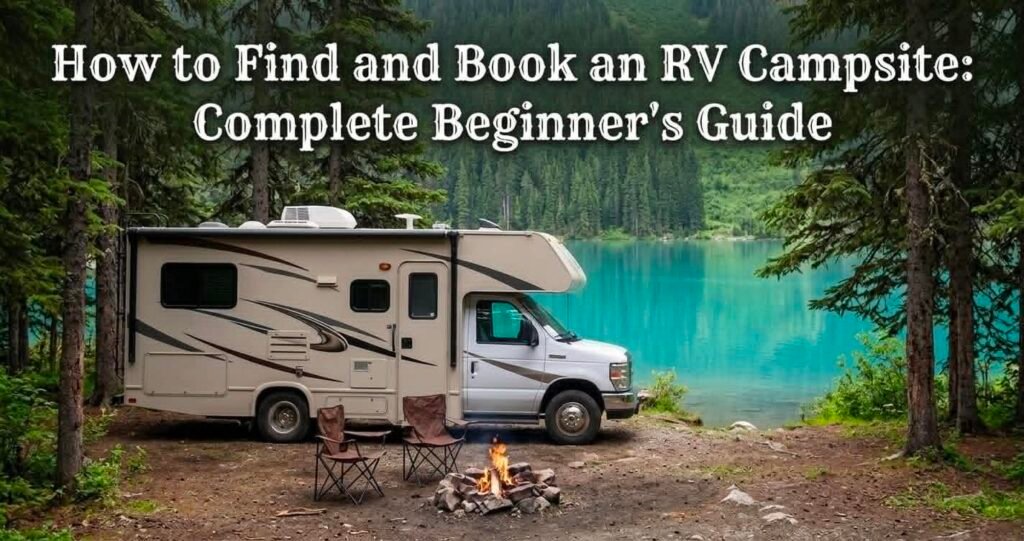
How to Find and Book an RV Campsite: Complete Beginner's Guide
Finding the right RV campsite can make or break a trip.
A beautiful campground with full hookups, easy access, and the right site size can make your stay relaxing. On the other hand, choosing a site that is too small, lacks the hookups you need, or is miles away from the places you want to visit can turn a great road trip into a frustrating experience.
If you’re new to RV travel, campsite booking can feel surprisingly complicated.
You may need to compare RV parks, campgrounds, state parks, private resorts, membership camping, and alternative overnight stays. Then you have to check site length, hookups, road access, cancellation policies, campground rules, and availability.
The good news is that it gets much easier once you know what to look for.
In this guide, you’ll learn how to find and book an RV campsite step by step. We’ll cover where to search, how to compare sites, what campground terms mean, how much RV camping can cost, and what to check before you make a reservation.
You’ll also learn how to avoid some of the most common campsite booking mistakes.
Whether you’re planning your first RV trip or simply want a better way to find campsites, this guide will help you book with more confidence.
If you’re ready to keep planning, these RV Explorer Journey guides can help you with the next step:
Finding an RV Campsite: What You Need to Know First
Before you start searching for an available campsite, take a few minutes to understand what you actually need.
This simple step can save you time later.
Not every RV campsite is designed for every type of RV. A small travel trailer may fit comfortably into a site that would be difficult for a large Class A motorhome. Likewise, a boondocking site may be perfect for an experienced camper but unsuitable if you need electricity, water, and sewer hookups.
So, before opening a campground booking website, answer a few basic questions.
Where are you going?
Start with your destination.
Think about the city, national park, attraction, event, or region you want to visit. Then decide how far you are willing to drive from the main destination.
For example, if you’re visiting a popular national park, staying 30–60 minutes away may give you more campsite choices and lower prices.
However, staying farther away also means more driving each day.
The best campsite is not always the closest campsite. It is the one that gives you the right balance of location, price, amenities, and convenience.
What type of camping do you want?
Next, decide what kind of experience you’re looking for.
Do you want:
- A basic campsite surrounded by nature?
- A private RV park with full hookups?
- A luxury RV resort?
- A state or national park campground?
- A quiet boondocking location?
- A campground close to a major attraction?
- A place with a swimming pool, laundry, Wi-Fi, or other amenities?
Your answer will immediately narrow the search.
What does your RV need?
Your RV also determines which campsites will work.
Before booking, know your:
- RV type
- Overall RV length
- Width
- Height
- Number of slide-outs
- Electrical requirements
- Water needs
- Sewer needs
- Towing setup, if applicable
Most importantly, measure your RV before you travel.
Remember to include the length of the RV and anything being towed when necessary. A campsite that looks large enough online may feel very different when you arrive.
What is your budget?
Finally, decide how much you want to spend.
RV campsite prices can vary dramatically depending on location, season, campground type, amenities, and demand.
A basic public campground may cost far less than a full-service RV resort.
Therefore, don’t search for a campsite based on price alone. Instead, compare what you receive for the price.
A $25 campsite with no hookups may not be a better deal than a $50 site with full hookups if you need electricity, water, and sewer.
Use this checklist to prepare for your first RV trip and make sure you don’t forget the essentials before leaving home.
Decide What Type of RV Camping You Want
One of the easiest ways to make campsite searching confusing is to search for everything at once.
Instead, start by choosing the type of RV camping that fits your trip.
There is no single “best” type of campsite. The right choice depends on your RV, budget, travel style, and how much comfort you want.
Private RV Parks
Private RV parks are one of the most common choices for RV travelers.
They range from simple campgrounds to large RV resorts with extensive amenities.
Depending on the property, you may find:
- Full hookups
- Laundry facilities
- Showers
- Swimming pools
- Clubhouses
- Wi-Fi
- Dog parks
- Camp stores
- Picnic areas
- Propane
- Dump stations
Private RV parks can be particularly convenient for first-time RV travelers because they often provide the services beginners need.
However, prices can be higher in popular destinations and during peak travel periods.
State Park and Public Campgrounds
State parks and other public campgrounds can offer a very different experience.
Many are located in scenic areas near lakes, forests, mountains, beaches, and other natural attractions.
They can also provide excellent value.
However, amenities vary considerably.
Some sites may have electricity and water, while others may have no hookups at all. Roads and campsites can also be narrower than those found at large private RV resorts.
Always check the site specifications before booking.
A campground being advertised as “RV friendly” does not necessarily mean every site can accommodate your RV.
RV Resorts
RV resorts are designed for travelers who want more amenities and comfort.
Depending on the property, you may find features such as:
- Pools
- Fitness centers
- Pickleball courts
- Restaurants
- Planned activities
- Large sites
- Clubhouses
- Laundry facilities
- High-speed internet
They can be especially attractive for longer stays.
However, they are usually more expensive than basic campgrounds.
Therefore, consider how much time you will actually spend using the amenities. If you’re going to spend most of the day exploring the surrounding area, paying extra for resort facilities may not provide much value.
Boondocking
Boondocking means camping without traditional campground hookups.
You may not have:
- Electricity
- Water
- Sewer
- A bathhouse
- A campground store
Instead, you rely on your RV’s onboard systems and equipment.
For example, solar panels, portable power stations, generators, fresh-water tanks, and waste tanks can become important parts of your setup.
Boondocking can provide more privacy and a closer connection to nature. However, it requires more preparation.
If you’re new to RV travel, consider trying a campground with hookups first. Once you’re comfortable managing your water, power, and waste systems, you can gradually explore more off-grid camping.
Alternative RV Camping
Traditional campgrounds are not your only option.
Some RV travelers choose alternative overnight stays on private properties, farms, wineries, breweries, and other locations.
These experiences can be very different from staying at a traditional campground.
They may offer fewer campground-style amenities, but they can provide unique locations and experiences.
For example, a traveler who wants a quiet overnight stop may prefer a private host location instead of a busy RV park.
The key is to understand what you’re booking before you arrive.
Read the listing carefully and check what is included, what facilities are available, and whether the location is suitable for your RV.
Know Your RV Before You Start Searching
This step sounds obvious.
Yet it is one of the easiest things for new RV travelers to overlook.
Before searching for a campsite, write down your RV’s basic specifications.
You don’t need to memorize everything. Just keep the information somewhere easy to access while you’re making reservations.
Your RV campsite cheat sheet
| What to know | Why it matters |
|---|---|
| RV type | Some campgrounds have vehicle restrictions |
| Total length | Determines whether the site can accommodate you |
| Width | Important for narrow sites and roads |
| Height | Critical for bridges, tunnels, and tree clearance |
| Slide-outs | You need enough room to extend them |
| Electrical needs | Determines which hookups you can use |
| Fresh-water capacity | Helps determine whether you need water hookups |
| Waste-tank capacity | Important when staying without sewer |
| Towing length | May affect site requirements |
| Pet information | Some campgrounds have breed or number restrictions |
Measure the entire setup
If you’re towing a vehicle, don’t look only at the length of your RV.
Your complete setup may be much longer.
For example, a fifth-wheel trailer plus a truck takes considerably more space than the trailer alone.
This matters when checking:
- Site length
- Parking
- Turning areas
- Pull-through access
- Campground roads
If you’re unsure, contact the campground before booking.
A quick question can prevent a very uncomfortable arrival.
Check your electrical requirements
Electrical hookups are another important consideration.
Common campground electrical services include 30-amp and 50-amp connections, although availability varies by campground and site.
Your RV’s electrical system determines what you need.
If you’re not sure, check your RV documentation or electrical panel before making a reservation.
Never assume that every RV campsite provides the same electrical service.
Think about your slide-outs
A campsite may technically fit your RV but still be uncomfortable once the slide-outs are extended.
Look at the site layout if the campground provides one.
Also consider trees, picnic tables, fire rings, utility posts, and neighboring vehicles.
A few extra feet can make a significant differenc
Check Your RV’s Height and Clearance
Length is not the only measurement that matters.
Your RV’s height can become especially important when entering older campgrounds, wooded areas, tunnels, or roads with low clearance.
Before choosing a campsite, know the maximum height of your complete RV setup.
Pay attention to:
- Low bridges
- Tunnel clearance
- Tree branches
- Campground entrance structures
- Narrow roads
- Covered parking areas
If your RV has rooftop equipment, such as an air conditioner, satellite equipment, or other accessories, include those when checking the total height.
A campground may be suitable for your RV once you reach the site, but the route to the site may still present a problem.
Check the Site’s Access
A campsite can have enough space on paper and still be difficult to reach.
This is especially important with larger motorhomes, fifth wheels, and long travel trailers.
Before booking, look for information about:
- Narrow campground roads
- Sharp turns
- Steep entrances
- Low-hanging branches
- Tight turns near the campsite
- Difficult backing areas
- Road restrictions
If the campground provides a site map, study it before making your reservation.
When information is unclear, contact the campground directly.
A few minutes of research before booking is much easier than trying to maneuver an oversized RV into a difficult site after a long day of driving.
Pull-Through vs. Back-In Sites
You’ll often see two basic campsite layouts when searching for an RV site: pull-through and back-in.
A pull-through site allows you to enter from one end and leave from another. These sites can be convenient for larger RVs or travelers who don’t want to back into a campsite.
Back-in sites require you to reverse your RV into the designated space.
They can sometimes offer better privacy or a more desirable location within a campground. However, they may require more maneuvering.
Neither option is automatically better.
Choose the site that matches your driving experience, RV size, and the campground layout.
Don’t Forget Your Towing Setup
If you’re traveling with a tow vehicle, trailer, or another vehicle, check how the campground handles additional vehicles.
Some sites include parking for your vehicle. Others may require you to park separately.
Also check whether the advertised site length refers to the actual usable campsite length or simply the maximum RV length the campground allows.
If you’re unsure, ask before booking.
Your RV Campsite Compatibility Checklist
Before moving on to the campsite search itself, make sure you know:
☐ RV type
☐ Total length
☐ Total height
☐ Width
☐ Number and position of slide-outs
☐ 30-amp or 50-amp electrical requirement
☐ Water hookup requirement
☐ Sewer hookup requirement
☐ Pull-through or back-in preference
☐ Towing or additional vehicle requirements
☐ Pet requirements
Having this information ready will make the next step much easier.
🚐 RV Explorer Journey Tip:
Keep your RV measurements in your phone.
Create a simple note with your RV’s length, height, width, electrical requirements, and towing length.
When you’re tired and trying to book a campsite from the road, you won’t have to search through manuals or paperwork.
Not sure what equipment you actually need? Start here before spending money on RV gear.
Where to Find RV Campsites
Once you know what your RV needs, you can start looking for actual campsites.
The challenge is that there isn’t one single website that lists every RV camping option.
Different types of campgrounds appear on different platforms. Therefore, knowing where to search can save you considerable time.
Campground Booking Platforms
Online campground booking platforms are often the easiest place to start.
They allow you to search by destination, dates, site type, amenities, and availability.
You can often compare several campgrounds without visiting multiple websites individually.
This is particularly useful when you’re planning a trip to an unfamiliar area.
However, don’t automatically assume that every available campsite appears on every platform.
Some campgrounds manage their reservations independently.
Campground and RV Park Websites
Once you find a campground you’re interested in, visit its official website as well.
The campground’s own website may provide additional information about:
- Site maps
- Campground rules
- Current amenities
- Seasonal information
- Cancellation policies
- Contact information
- Specific site types
In some cases, you may also be able to book directly.
This gives you an opportunity to compare the information before making a reservation.
State Park and Public Camping Websites
If you prefer state parks or public campgrounds, start with the relevant government or park reservation system.
These sites can provide information about campsite availability, campground rules, facilities, and reservation windows.
Because public campgrounds can have different booking systems from private RV parks, check the reservation rules carefully.
Some popular locations can fill quickly, particularly during holidays and peak seasons.
RV Membership and Alternative Camping Platforms
RV travelers also have access to membership-based and alternative camping options.
These can include overnight stays at private properties, farms, wineries, breweries, and other locations.
They may be especially appealing if you’re looking for something different from a traditional campground.
However, availability, amenities, and site conditions can vary considerably.
Read the individual listing carefully before booking.
Google Maps and Reviews
Google Maps can also be useful during the research stage.
You can discover RV parks in an area, look at photos, read recent reviews, and check the campground’s location relative to nearby attractions.
However, treat reviews as one source of information rather than the final decision-maker.
A review from several years ago may no longer reflect the current campground.
Look for recent comments that mention the things that matter to you, such as site size, road access, cleanliness, noise, Wi-Fi, or campground management.
Ask Other RV Travelers
Sometimes the best information comes from people who have actually stayed there.
RV communities, travel groups, and experienced RV travelers can provide useful insights that aren’t always obvious from a campground listing.
For example, they may know that a particular section of a campground has better shade, quieter sites, or easier access for larger RVs.
Still, verify important information with the campground itself before booking.
Campgrounds change, and conditions can vary from one site to another.
Use More Than One Source
The most reliable approach is to cross-check your information.
Start with a booking platform to discover available options.
Then check the campground’s official website.
Finally, look at recent reviews and photos.
This gives you a much clearer picture than relying on a single listing.
🚐 RV Explorer Journey Tip:
Don’t stop your research when you find an available campsite.Availability tells you that you can book the site.It doesn’t necessarily tell you that you should.Before paying, cross-check the campground’s official information, site details, recent reviews, and location. That extra step can help you avoid many unpleasant surprises.
Planning a Texas road trip? Explore some of the best RV parks and campgrounds across the state.
How to Search for an RV Campsite Online
Once you know where you want to go and what your RV needs, online campsite searches become much easier.
The key is to search with your actual requirements, rather than simply choosing the first campground that appears.
A good search should help you answer three questions:
- Is the campground in the right location?
- Can it accommodate my RV?
- Does it offer the facilities and experience I need?
Start With Your Destination and Dates
Begin with the basics: where you want to stay and when you want to arrive.
Enter your destination, travel dates, and number of nights into your chosen campground search or booking platform.
If your destination is flexible, search a wider area.
For example, instead of searching only for RV parks inside a popular tourist town, search within 30–60 miles of the area.
You may discover less expensive campgrounds with better availability.
However, remember to consider the additional driving time.
A cheaper campsite isn’t necessarily a better deal if you have to spend an hour driving each way to reach the attractions you planned to visit.
Enter Your RV Information
If the booking platform allows you to enter your RV type and size, use that information.
Your search results may change depending on whether you’re traveling in:
- A Class A motorhome
- A Class B camper van
- A Class C motorhome
- A travel trailer
- A fifth wheel
- A pop-up camper
If the platform doesn’t ask for your RV dimensions, you’ll need to check the individual campsite details yourself.
Don’t assume that an RV-friendly campground can accommodate every RV.
Filter for the Hookups You Need
Next, narrow your results according to your power, water, and sewer requirements.
For example, if you’re looking for a comfortable multi-night stay, you may want:
30-amp or 50-amp electricity + water + sewer
If you’re comfortable camping without hookups, you can broaden the search.
Using filters can save considerable time because you won’t have to open dozens of listings that don’t meet your basic requirements.
Filter by Amenities
Amenities should come after your essential requirements.
Start with what you need, then consider what you want.
For example:
| Need | Nice to Have |
|---|---|
| Correct site length | Swimming pool |
| Required electrical hookup | Clubhouse |
| Water/sewer | Fitness center |
| RV access | Dog park |
| Suitable location | Laundry |
| Accepts pets | Wi-Fi |
This approach helps prevent you from paying more for facilities you may never use.
Look at the Map
Don’t judge a campground only by its description.
Open the map and look at the actual location.
Check its distance from:
- Your destination
- Major highways
- Grocery stores
- Fuel stations
- Hospitals or medical facilities
- Restaurants
- Outdoor attractions
The surrounding area matters almost as much as the campground itself.
For a short overnight stop, easy highway access may be your priority.
For a week-long vacation, being close to attractions may matter more.
Read Recent Reviews
After narrowing your search, read recent guest reviews.
Don’t just look at the overall rating.
Look for repeated comments about things that matter to RV travelers.
For example:
- Are the sites actually as large as advertised?
- Are the roads easy to navigate?
- Is the campground noisy?
- Is the Wi-Fi reliable?
- Are the bathrooms clean?
- Is the campground well maintained?
- Are the hookups conveniently located?
- Is the staff helpful?
- Are there problems with flooding or drainage?
One negative review doesn’t necessarily mean a campground is bad.
However, if several recent travelers mention the same problem, pay attention.
Look at Photos Carefully
Photos can reveal details that descriptions don’t mention.
Look at the campsite itself rather than only the campground’s promotional photos.
Pay attention to:
- Site width
- Trees
- Shade
- Gravel or pavement
- Distance between sites
- Fire rings
- Picnic tables
- Utility hookups
- Road width
- Turning space
If possible, compare official campground photos with recent guest photos.
This can give you a more realistic idea of what to expect.
Create a Shortlist Before Booking
Don’t immediately book the first campsite that looks good.
Instead, create a shortlist of two or three options.
Then compare them based on:
- Location
- Price
- Site size
- Hookups
- Amenities
- Reviews
- Cancellation policy
- Availability
- Driving distance
This makes the final decision much easier.
Be Careful With “Available” Sites
An available site isn’t automatically a suitable site.
A booking system may show an open space without giving you every detail about the location.
Before confirming your reservation, open the individual site information if available.
Check the site number, dimensions, hookups, access, and any restrictions.
If something is unclear, contact the campground.
🚐 RV Explorer Journey Tip:
Don’t search for the “best RV campsite.” Search for the best campsite for your trip.Your priorities may be completely different from another RV traveler.For one person, the best site may be a quiet campsite beside a lake.For another, it may be a full-hookup site five minutes from the highway.Define your priorities first. Then let the search filters help you find the right match.
Still deciding whether the RV lifestyle is right for you? This guide can help you think through the practical side of RV living.
How to Choose the Right RV Campsite
Finding several available campsites is only the beginning. The next step is deciding which specific site will work best for your RV and your trip.
Two campsites at the same campground can provide completely different experiences.
Compare the Site, Not Just the Campground
When possible, look at the individual site details.
Check:
- Site length and width
- Pull-through or back-in
- Hookup location
- Shade and trees
- Ground surface
- Privacy
- Distance from bathrooms or common areas
- Accessibility for your RV
A site near the campground entrance may be convenient, but it could also have more traffic and noise.
Meanwhile, a site farther inside the campground may be quieter but harder to access.
Consider Your Daily Plans
Think about how you will actually use the campsite.
If you’re staying one night during a long road trip, easy access and a quick departure may be more important than a beautiful view.
For a week-long vacation, however, you may care much more about privacy, shade, outdoor space, and proximity to campground amenities.
Your campsite should support the way you plan to travel.
Check the Ground and Site Surface
The surface can make a surprising difference.
Look for whether the site is:
- Paved
- Concrete
- Gravel
- Dirt
- Grass
A level, paved site can make setup much easier.
If you’re staying after heavy rain, drainage can also matter. Recent guest photos and reviews may reveal problems that aren’t obvious from the campground’s official listing.
Think About Noise and Location
Location within the campground matters.
Sites near playgrounds, swimming pools, recreation areas, dumpsters, or busy roads may experience more activity.
That isn’t necessarily bad. Families may actually prefer being close to recreation areas.
However, if you’re looking for a quiet evening, a different section may be a better choice.
🚐 RV Explorer Journey Tip:
Don’t automatically choose the cheapest available site.If spending a few extra dollars gives you better access, more space, less noise, or a more comfortable setup, it may be worth it—especially when you’re staying for several nights.
The goal isn’t to find the cheapest campsite.It’s to find the campsite that gives you the best value for your particular trip.
Looking beyond traditional campgrounds? Compare several popular options for finding different types of RV stays.
RV Campsite Comparison: What Should You Look For?
When several campsites look good, put them side by side.
A simple comparison can prevent you from focusing too heavily on one feature, such as price.
| What to Compare | Why It Matters |
|---|---|
| Location | Affects driving time and convenience |
| Site size | Ensures your RV fits comfortably |
| Hookups | Determines how self-sufficient you can be |
| Price | Helps you stay within budget |
| Reviews | Reveals recent guest experiences |
| Amenities | Adds comfort and convenience |
| Site type | Pull-through and back-in sites suit different needs |
| Cancellation policy | Protects you if your plans change |
Look at the Total Cost
The advertised nightly rate isn’t always the final price.
Check for:
- Reservation fees
- Extra vehicle fees
- Pet fees
- Additional guest charges
- Resort or amenity fees
- Taxes
- Minimum-stay requirements
Compare the final booking cost, not just the headline price.
Consider the Cancellation Policy
A flexible cancellation policy can be valuable when you’re planning a longer RV trip.
Weather, vehicle problems, illness, or changes to your itinerary can happen.
Before booking, understand exactly when you can cancel and whether you’ll receive a refund or credit.
Use a Simple Scoring System
If you’re struggling to choose between several options, give each campsite a score from 1–5 for:
Location + Price + Site Quality + Amenities + Reviews
You don’t need a complicated formula.
The goal is simply to make your decision based on the factors that matter most to you.
🚐 RV Explorer Journey Tip:
Compare value, not just price.A slightly more expensive campsite can sometimes save you money in other ways if it is closer to your destination, includes the hookups you need, or eliminates the need for additional services.The cheapest campsite isn’t always the cheapest trip.

How Much Does an RV Campsite Cost?
RV campsite prices can vary widely. Location, season, campground type, hookups, and amenities can all affect the final cost.
Instead of looking for one “average” price, think about what you’re getting for your money.
What Affects the Price?
The biggest factors usually include:
- Location: Popular destinations tend to cost more.
- Season: Prices often increase during holidays and peak travel periods.
- Hookups: Full-hookup sites generally cost more than basic sites.
- Amenities: Pools, recreation areas, laundry, and other facilities can increase the rate.
- Site type: Premium, waterfront, oversized, or more private sites may cost extra.
- Length of stay: Some campgrounds offer weekly or monthly rates.
Don’t Forget Additional Fees
The nightly rate may not be the complete price.
Before booking, check whether the campground adds:
- Reservation fees
- Taxes
- Pet fees
- Extra vehicle fees
- Guest fees
- Premium-site charges
- Cancellation fees
For longer stays, ask whether a weekly or monthly rate is available.
How to Get Better Value
You don’t always need to choose a cheaper campground.
Instead, compare the total cost of the stay.
For example, a campground farther from your destination might have a lower nightly rate but require more fuel and driving time.
Likewise, paying more for full hookups may be worthwhile if it means you don’t need to move your RV to refill water or manage your waste during a longer stay.
🚐 RV Explorer Journey Tip:
Always compare the final price, not just the advertised nightly rate.Before clicking “Book,” check the complete cost for your dates and ask yourself whether the location, site, hookups, and amenities justify the price.That simple habit can help you avoid unexpected costs and choose a campsite that offers better overall value.
If you’re ready to compare campground booking options more closely, this guide takes a deeper look at Campspot.
→ Is Campspot Worth It in 2026?
How Far in Advance Should You Book?
The best time to book an RV campsite depends on where you’re going, when you’re traveling, and how flexible your plans are.
Popular campgrounds can fill quickly, especially during holidays and peak travel seasons.
For Popular Destinations
If you’re planning to visit a major national park, beach destination, large city, or popular tourist attraction, booking early is usually the safest approach.
For peak dates, consider booking several weeks or even months ahead when reservations open.
This is especially important if you need:
- A large RV site
- Full hookups
- A specific site
- A weekend stay
- A holiday reservation
- Multiple nights together
For Off-Peak Travel
You generally have more flexibility outside the busiest travel periods.
Weekdays can also offer more availability than weekends.
If your dates are flexible, search several nearby campgrounds rather than limiting yourself to one property.
That gives you more options and can sometimes reduce the price.
Last-Minute Camping
Last-minute bookings can work, but they require flexibility.
You may find cancellations shortly before your arrival date. However, relying on cancellations isn’t a good strategy if you’re traveling to a popular destination or have specific campsite requirements.
Instead, have a backup campground in mind.
When Should You Start Looking?
A simple approach is:
Popular destination + peak season: Book as early as possible.
Popular destination + off-season: Start looking several weeks ahead.
Less popular destination + flexible dates: You may have more last-minute options.
Holiday weekends: Book early and expect higher demand.
🚐 RV Explorer Journey Tip:
Don’t wait until you know your entire RV trip perfectly before checking campsites.Start researching early.Even if you aren’t ready to book, checking availability can tell you whether your planned dates are realistic. If your first choice is already filling up, you can adjust your route before your trip is locked in.A little research early can save you from a lot of stress later.
How to Read an RV Campsite Listing
Finding an available campsite is only the first step. Before you book, take a few minutes to read the listing carefully.
A campsite description can tell you whether the site will actually work for your RV.
Check the Site Details
Look for:
- Site length: Make sure your entire RV setup fits.
- Site width: Check whether your slide-outs can extend comfortably.
- Site type: Pull-through and back-in sites have different requirements.
- Hookups: Confirm electricity, water, and sewer.
- Surface: Check whether the site is gravel, concrete, grass, or another surface.
- Shade: Trees can be helpful, but low branches may create clearance problems.
- Pet rules: Some campgrounds have restrictions on pets, breeds, or numbers.
Look Beyond the Photos
Photos can be useful, but don’t rely on them alone.
A picture may not show the slope of the site, the distance between neighboring RVs, low branches, or how easy it is to maneuver.
If available, check a site map before booking.
It can reveal important details that aren’t obvious from photographs.
Read the Rules and Policies
Also check:
- Check-in and checkout times
- Cancellation policy
- Minimum stay
- Quiet hours
- Campfire rules
- Generator restrictions
- Pet requirements
- Extra vehicle policies
These details can vary significantly between campgrounds.
Contact the Campground When You’re Unsure
If the listing doesn’t answer an important question, contact the campground before paying.
For example, you might ask:
“My RV is 38 feet long with one vehicle. Will this site comfortably accommodate my setup?”
A quick confirmation can prevent an unpleasant surprise when you arrive.
🚐 RV Explorer Journey Tip:
Don’t book a campsite based on the photos alone.Read the site specifications, check the map, and confirm anything that could affect your stay.The more you understand about the site before booking, the fewer surprises you’ll have when you arrive.
RV Campsite Hookups Explained
Understanding campsite hookups is important because not every RV site provides the same services.
Before booking, make sure the hookups match what your RV needs.
What Is a Full-Hookup Site?
A full-hookup RV site usually provides:
- Electricity
- Fresh water
- Sewer connection
For many RV travelers, full hookups are the most convenient option, especially for longer stays.
You can use your RV’s main systems without relying as heavily on your onboard water and waste tanks.
What Is a Partial-Hookup Site?
Partial-hookup sites provide some, but not all, of the services above.
For example, a site might offer:
- Electricity and water
- Electricity only
- Water and electricity without sewer
Always check the exact services rather than assuming that “hookups” means full hookups.
Understanding 30-Amp and 50-Amp Electricity
RV campgrounds commonly offer 30-amp or 50-amp electrical service.
Your RV determines which connection you need.
Larger RVs with more electrical equipment may require 50-amp service, while many smaller RVs use 30-amp service.
If you’re unsure, check your RV’s electrical specifications before making a reservation.
What If There Is No Sewer Hookup?
A campsite without sewer doesn’t necessarily mean you cannot stay there.
You can use your RV’s waste tanks and dump them at an available dump station.
However, tank capacity becomes more important during longer stays.
If you plan to stay several nights, check whether the campground has a dump station or another convenient waste-disposal option.
🚐 RV Explorer Journey Tip:
Never assume “hookups available” means full hookups.Before booking, look specifically for electricity, water, and sewer and confirm the electrical amperage your RV requires.A few seconds checking the listing can prevent a major problem after you arrive.
How to Book an RV Campsite: Step-by-Step
Once you’ve found a campsite that fits your RV, booking it is usually straightforward.
However, don’t rush through the reservation. A few details are worth checking before you confirm.
Enter Your Travel Dates
Start with your:
- Arrival date
- Departure date
- Number of guests
- RV type
If your dates are flexible, check nearby dates as well. A one-day change can sometimes give you more availability or a better rate.
Select the Right Site
Compare the available sites carefully.
Check the:
- Site length
- Site width
- Hookups
- Site type
- Surface
- Location within the campground
If you have a choice, look at the campground map before selecting your site.
Review the Total Price
Before continuing, check the complete cost.
Look for taxes, booking fees, pet fees, extra vehicle charges, or other additional costs.
The final price is more important than the advertised nightly rate.
Read the Cancellation Policy
This is one of the easiest details to skip.
Cancellation policies can vary by campground and may depend on how far in advance you cancel.
Make sure you understand:
- Whether cancellations are refundable
- How much notice is required
- Whether there is a cancellation fee
- Whether changing dates is allowed
Confirm the Reservation
Before submitting payment, review everything one final time.
Check your:
Dates → RV size → Site → Hookups → Price → Policies
Then complete the reservation.
Save the confirmation email or reservation number somewhere easy to find.
🚐 RV Explorer Journey Tip:
Take a screenshot of your reservation after booking.Keep the confirmation, campground address, phone number, check-in instructions, and site number together on your phone.If you lose cell service on the road, you’ll still have the information you need when you arrive.
Booking Platforms vs. Booking Directly
Once you find a campground, you may have two options: book through an online reservation platform or reserve directly with the campground.
Both can work well. The better choice depends on what you’re looking for.
Booking Through an Online Platform
Online campground platforms make it easier to compare different properties in one place.
You can often:
- Search multiple campgrounds
- Compare dates and availability
- Filter by amenities
- Check prices
- Read reviews
- View campsite details
- Make a reservation online
This can be especially useful when you’re planning a longer road trip and don’t want to visit several campground websites individually.
However, always check the campground’s own policies before booking. Cancellation rules, fees, and site information can vary.
Booking Directly With the Campground
Booking directly means reserving through the campground’s website or contacting them by phone.
This can be helpful when you have specific questions about your RV.
For example, you may want to confirm:
- Whether your RV will fit
- Which site is best for your setup
- Road or clearance concerns
- Pet policies
- Special arrival instructions
- Long-term or extended-stay options
Speaking directly with the campground can also be useful when the information online isn’t clear.
Which Should You Choose?
There isn’t one answer for every trip.
| Booking method | Best for |
|---|---|
| Online platform | Comparing multiple campgrounds |
| Campground website | Checking specific property details |
| Phone | Questions about your RV or special requirements |
A good approach is to use online platforms for research and comparison, then check the campground’s own website before making your final decision.
This gives you a better chance of understanding the complete booking terms.
🚐 RV Explorer Journey Tip:
Don’t assume the first booking option you find is automatically the best one.Compare the campsite details, total price, cancellation policy, and booking conditions before you pay.For many travelers, the easiest strategy is to use a campground booking platform to discover options, then verify the details directly with the campground.
Harvest Hosts vs. Traditional Campgrounds
Traditional campgrounds are not the only way to spend the night in your RV.
Depending on your travel style, you may also enjoy staying at a host location through a membership program such as Harvest Hosts.
The right option depends on what you want from the experience.
Traditional RV Campgrounds
Traditional campgrounds are usually the better choice when you need predictable RV services and amenities.
Depending on the campground, you may have:
- Full hookups
- Restrooms and showers
- Laundry facilities
- Dump stations
- Swimming pools
- Wi-Fi
- Camp stores
- Recreation areas
They are also often located near popular attractions and major travel routes.
For longer stays, full-hookup campgrounds can make RV life much easier.
Harvest Hosts
Harvest Hosts offers a different type of RV experience.
Instead of staying at a traditional campground, members can stay at participating locations such as farms, wineries, breweries, and other unique properties.
The appeal is the experience itself.
You may spend a night somewhere you would never find on a typical campground directory.
However, amenities and site conditions can vary. Some locations may have limited or no hookups, so read each listing carefully before booking.
Which Is Better?
Neither option is automatically better.
| Traditional Campground | Harvest Hosts |
|---|---|
| More campground amenities | Unique host locations |
| Often full hookups | Hookups vary |
| Good for longer stays | Often suited to overnight stays |
| Predictable facilities | More varied experiences |
| Usually easier for beginners | Great for travelers seeking something different |
If you need electricity, water, sewer, and campground amenities, a traditional RV park may be the better choice.If you’re looking for a memorable overnight experience and don’t need full campground facilities, a Harvest Hosts location could be worth considering.
🚐 RV Explorer Journey Tip:
Choose the camping experience first, then choose the booking option.Don’t select a campground or host simply because it looks inexpensive or interesting online.Ask yourself what you actually need for that night: full hookups and convenience, or a unique place to stay?
Common RV Campsite Booking Mistakes
Booking an RV campsite may seem simple, but small mistakes can create big problems when you arrive.
The good news is that most are easy to avoid.
Booking a Site That Is Too Small
Don’t rely only on your RV’s advertised length.
Remember to consider your complete setup, including a tow vehicle or anything you need to park at the site.
When in doubt, contact the campground before booking.
Assuming Every Site Has Full Hookups
A listing may mention “RV hookups” without providing everything you need.
Always confirm whether the site includes:
- Electricity
- Water
- Sewer
Also check whether the electrical connection is 30-amp or 50-amp.
Ignoring the Campground Location
A cheap campsite isn’t necessarily a good deal if it’s far from everything you want to see.
Consider driving time, fuel costs, road conditions, and access to nearby attractions.
Not Checking the Cancellation Policy
Travel plans can change.
Before paying, understand the campground’s cancellation deadline and whether your payment is refundable.
Booking Without Reading the Reviews
Reviews can reveal details that aren’t obvious from the official listing.
Look for repeated comments about:
- Site accessibility
- Cleanliness
- Noise
- Wi-Fi
- Staff
- Road conditions
- Actual site size
Don’t focus on one negative review. Look for patterns across multiple reviews.
Forgetting Campground Rules
Every campground can have different rules.
Check pet policies, quiet hours, fire restrictions, generator rules, and guest or vehicle limits before you arrive.
🚐 RV Explorer Journey Tip:
Before booking, spend two extra minutes checking the details you normally want to skip.Site size, hookups, location, fees, and cancellation rules may not be exciting, but they can make the difference between a smooth arrival and a stressful one.
RV Campsite Booking Checklist
Before you finalize your reservation, take a moment to run through this quick checklist.
It can help you catch small details before they become problems on the road.
Before You Book
☐ Confirm your arrival and departure dates
☐ Check the campground’s location
☐ Confirm your RV’s total length and width
☐ Check whether the site is pull-through or back-in
☐ Confirm the site’s hookups
☐ Check 30-amp or 50-amp electrical service
☐ Check whether sewer is available
☐ Review site photos and the campground map
☐ Read recent guest reviews
☐ Check pet and vehicle rules
☐ Review campground amenities
☐ Check the total price, including additional fees
☐ Read the cancellation policy
After You Book
☐ Save your confirmation number
☐ Save the campground address
☐ Note the check-in and checkout times
☐ Save the campground phone number
☐ Check whether you need a gate code or special arrival instructions
☐ Keep your reservation accessible offline
A Simple Rule
If you cannot confidently answer “Will this site work for my RV?”, don’t book it yet.
Take another look at the listing or contact the campground directly.
🚐 RV Explorer Journey Tip:
Create your own campsite checklist once and reuse it for every trip.You won’t have to remember every detail each time you make a reservation. A simple checklist can become one of the most useful tools in your RV trip-planning routine.
What to Do After Booking
Your campsite is booked. Now it’s time to make sure your arrival goes smoothly.
A few simple steps before you leave can save you from searching for information while you’re on the road.
Save Your Reservation Details
Keep your confirmation somewhere easy to access.
Save:
- Reservation number
- Campground address
- Site number, if assigned
- Check-in and checkout times
- Campground phone number
- Gate or access code
- Cancellation information
It’s also smart to keep a screenshot or offline copy in case your internet connection is unreliable.
Check the Route
Don’t wait until you’re close to the campground to check the directions.
Look at your route in advance and consider:
- Low bridges
- Narrow roads
- Steep grades
- Weight restrictions
- Difficult turns
- Construction or road closures
This is especially important with a larger RV or a towable setup.
A route that works perfectly for a car may not be comfortable for an RV.
Confirm Arrival Instructions
Some campgrounds have specific procedures for late arrivals.
You may need to:
- Check in at an office
- Use a gate code
- Pick up a key
- Follow a self-check-in process
- Park temporarily before checking in
Knowing this before you arrive makes the first few minutes much easier.
Check the Weather
Weather can affect your campsite experience and your route.
Before leaving, check the forecast for both your destination and the areas you’ll drive through.
If severe weather is expected, you may need to adjust your plans.
🚐 RV Explorer Journey Tip:
Don’t consider campsite booking finished when you click “Confirm.”Your reservation is only one part of the preparation.Save the details, check your route, confirm arrival instructions, and review the weather before you leave. You’ll arrive more prepared and with much less stress.
Frequently Asked Questions
What is the best way to find an RV campsite?
Start by deciding where you want to go, what your RV needs, and what type of camping experience you want. Then compare campgrounds based on location, site size, hookups, amenities, reviews, price, and cancellation policies.
How far in advance should I book an RV campsite?
Popular destinations and holiday weekends should usually be booked as early as possible. For less busy destinations or flexible travel dates, you may have more last-minute options.
How much does an RV campsite cost?
Prices vary based on location, season, campground type, hookups, amenities, and demand. Always check the total price, including taxes and additional fees, rather than looking only at the nightly rate.
What is a full-hookup RV campsite?
A full-hookup site typically provides electricity, fresh water, and sewer. However, always check the individual campsite listing because services can vary.
What is the difference between a pull-through and back-in RV site?
A pull-through site allows you to drive in and out without backing your RV into the site. A back-in site requires you to reverse into the campsite. Pull-through sites can be particularly convenient for larger RVs or travelers who prefer easier parking.
Should I book an RV campsite directly or through a booking platform?
Both options can work well. Online platforms make it easier to compare multiple campgrounds, while booking directly can be useful when you have specific questions about the property or your RV setup.
Ready To Get Started
Final Thoughts
Finding and booking an RV campsite doesn’t have to be complicated.
The key is to match the campsite to your RV, your travel plans, and the experience you want.
Before booking, check the site size, hookups, location, total cost, campground rules, reviews, and cancellation policy. Then save your reservation details and prepare your route before you leave.
With a little practice, campsite planning becomes much easier.
You also don’t have to book the first available site. Compare your options, think about what you actually need, and choose the campsite that offers the best combination of location, comfort, price, and convenience.
Whether you’re planning a weekend getaway, a cross-country adventure, or your first RV trip, a good campsite can make the entire journey more enjoyable.
🚐 RV Explorer Journey Tip:
Don’t try to make every campsite perfect. Make it right for your trip.Sometimes the best campsite isn’t the most expensive resort or the closest location. It’s the one that fits your RV, your budget, and your plans without creating unnecessary stress.Happy camping, and enjoy the journey! 🚐🏕️
Keep Planning Your RV Adventure
If you’re ready to keep planning, these RV Explorer Journey guides can help you with the next step:
→ First RV Trip Checklist: Don’t Leave Home Without This
Use this checklist to prepare for your first RV trip and make sure you don’t forget the essentials before leaving home.
→ Best RV Essentials for Beginners
Not sure what equipment you actually need? Start here before spending money on RV gear.
→ 15 Best RV Parks in Texas (2026 Complete Camping Guide)
Planning a Texas road trip? Explore some of the best RV parks and campgrounds across the state.
→ Is RV Living Right for You? Complete Beginner’s Guide
Still deciding whether the RV lifestyle is right for you? This guide can help you think through the practical side of RV living.
→ Harvest Hosts vs. Boondockers Welcome vs. Campspot
Looking beyond traditional campgrounds? Compare several popular options for finding different types of RV stays.
→ Is Campspot Worth It in 2026?
If you’re ready to compare campground booking options more closely, this guide takes a deeper look at Campspot.

Melinda Szekeres, is the founder of RV Explorer Journey, a resource dedicated to helping RV travelers explore the open road with confidence. Through extensive research and a passion for the RV lifestyle, Melinda curates honest gear reviews, campsite guides, solar power tips, and money-saving travel advice to help both beginners and seasoned road trippers plan their perfect adventure.