First RV Trip Checklist: Everything You Need Before You Leave Home (2026 Guide)
Starting your first RV adventure is exciting. At the same time, it can feel a little overwhelming. Unlike a hotel vacation, RV camping requires you to bring many everyday essentials with you. Forgetting just one important item—such as a water pressure regulator, surge protector, or sewer hose—can quickly turn an enjoyable trip into a stressful experience.This First RV Trip Checklist is designed to help new RV owners pack with confidence and avoid common beginner mistakes.
The good news is that preparing for your first RV trip doesn’t have to be complicated. A well-organized checklist helps you pack with confidence, stay safe on the road, and avoid expensive last-minute purchases at campground stores. It also saves time during setup, allowing you to spend more time enjoying your destination instead of searching for missing gear.
When I first started researching RV travel, I realized that many beginner checklists left out small items that can make a big difference once you arrive at a campsite. This guide combines recommendations from experienced RV travelers with practical planning advice to help you feel prepared before your first adventure. Whether you’re renting an RV for a weekend or buying your very first motorhome or travel trailer, these essentials will help you start your journey on the right foot.
In this complete First RV Trip Checklist, you’ll discover exactly what to pack, how to prepare your RV before leaving home, and which beginner-friendly accessories are worth adding to your setup. From important documents and safety equipment to kitchen supplies, campground gear, and must-have RV essentials, this guide covers everything you need before you hit the road.
By the end, you’ll have a complete RV checklist you can follow before every trip, helping you travel with confidence and avoid the common mistakes many first-time RVers make.
First RV Trip Checklist: RV Documents to Bring
Planning your first RV trip is exciting, but it’s easy to overlook small details when you’re focused on the adventure ahead. Unlike staying in a hotel, your RV is your transportation, kitchen, bedroom, and bathroom all in one. That means you’re responsible for bringing everything you need to stay safe, comfortable, and prepared.
A well-organized First RV Trip Checklist takes the guesswork out of planning. Instead of wondering if you’ve forgotten something important, you can leave home knowing your RV is ready for the road. It also helps you develop good habits that you’ll use on every future camping trip.
A Checklist Helps You Stay Organized
Packing for an RV trip involves much more than clothing and food. You’ll also need equipment for water hookups, electrical connections, waste disposal, cooking, sleeping, and campground setup. With so many items to remember, it’s easy to leave something behind.
A checklist breaks the process into simple categories. Instead of packing everything at the last minute, you can check off one section at a time. This makes preparation faster and much less stressful.
Even experienced RV owners rely on checklists before every trip because small mistakes can happen to anyone.



It Improves Safety on the Road
Safety should always come first. A checklist reminds you to inspect important systems before leaving home.
For example, you’ll want to verify that:
- Tires are properly inflated.
- Lights and turn signals work correctly.
- Batteries are charged.
- Propane valves are secure.
- Smoke and carbon monoxide detectors are working.
- Emergency equipment is easy to access.
Taking just a few extra minutes before departure can help prevent breakdowns and unexpected problems during your trip.
You’ll Save Money
Many beginners spend more than necessary because they forget essential supplies. Buying RV accessories at a campground or convenience store is often much more expensive than purchasing them before your trip.
For example, forgetting a fresh water hose, surge protector, or sewer hose kit may force you to buy one at premium campground prices. Planning ahead helps you avoid unnecessary expenses and keeps your travel budget under control.
Campground Setup Becomes Much Easier
After a long day of driving, the last thing you want is to realize you’re missing an important piece of equipment.
Essential items such as leveling blocks, wheel chocks, water pressure regulators, and electrical adapters make setting up your campsite faster and much less frustrating.
When everything is packed and organized before you leave home, you’ll spend less time solving problems and more time relaxing around the campsite.
You’ll Feel More Confident
One of the biggest concerns for first-time RV owners is the fear of forgetting something important. That’s completely normal.
A complete Beginner RV Checklist gives you confidence before every trip. Instead of second-guessing yourself, you’ll know you’ve packed the essentials for cooking, sleeping, staying safe, and enjoying your adventure.
As you gain more experience, you can customize your checklist based on your travel style. However, starting with a complete list helps build a solid foundation and reduces unnecessary stress.
Whether you’re heading out for a weekend getaway or planning a cross-country road trip, a reliable RV travel checklist is one of the simplest tools for making your journey smoother, safer, and more enjoyable.
Traveling Without vs. With an RV Checklist
| Without a Checklist | With a Checklist |
|---|---|
| Forgot the fresh water hose | Ready to connect to campground water |
| No surge protector | Safe electrical hookup |
| Missing sewer hose kit | Quick and clean waste connection |
| No leveling blocks | Comfortable and level sleeping |
| Last-minute shopping | Save money by preparing ahead |
| Higher stress | Greater confidence before departure |
| Longer campsite setup | Faster and easier arrival |
| More chance of forgetting essentials | Everything packed and organized |
🚐 RV Explorer Journey Tip
Keep your First RV Trip Checklist on your phone as well as a printed copy inside your RV. Before every trip, take five minutes to review it. Even experienced RVers use checklists because they’re one of the easiest ways to avoid costly mistakes and travel with confidence
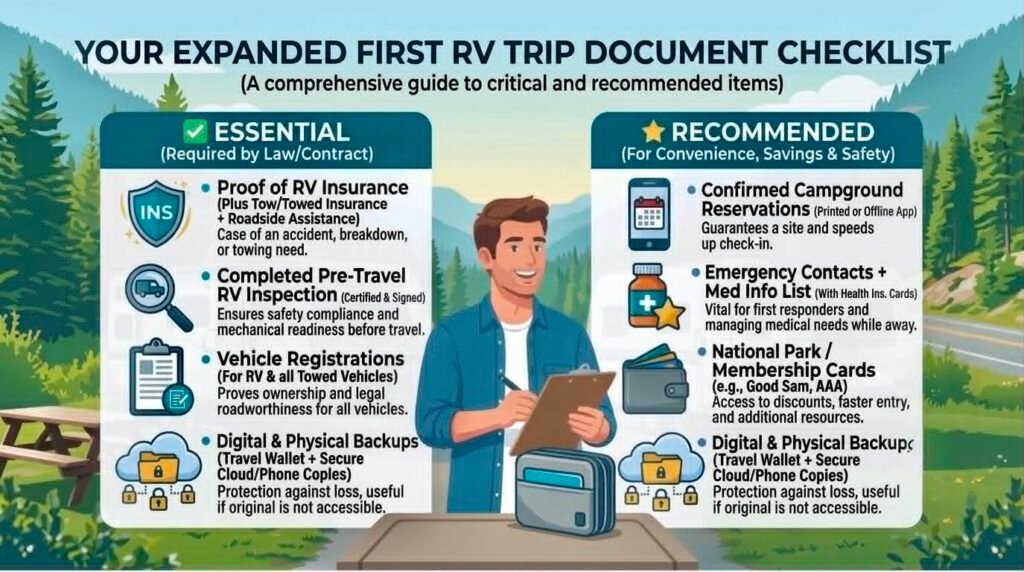
First RV Trip Checklist: RV Documents to Bring
Use this checklist before every trip to make sure nothing is left behind.
| Document | Why You Need It | Required |
|---|---|---|
| ✔ Driver’s license | Required to legally operate your RV or tow vehicle. | ✅ |
| ✔ Vehicle registration | Proves ownership and may be requested during a traffic stop. | ✅ |
| ✔ RV insurance card | Important in case of an accident or emergency. | ✅ |
| ✔ Campground reservation confirmations | Makes check-in quick and easy. | ✅ |
| ✔ Emergency contact information | Helps first responders contact family if needed. | ✅ |
| ✔ Roadside assistance membership card | Useful if your RV breaks down or you get a flat tire. | ⭐ Recommended |
| ✔ Health insurance card | Helpful in case of a medical emergency while traveling. | ⭐ Recommended |
| ✔ National park or campground membership cards | Provides discounts and faster check-in at participating campgrounds. | ⭐ Recommended |
| ✔ Printed campground directions or offline maps | Helpful when traveling through areas with limited cell service. | ⭐ Recommended |
Organize Your Documents Before You Leave
A little preparation goes a long way. Before every trip, review your documents to make sure they are current and easy to access.
Here are a few simple tips:
- Check that your driver’s license and registration are not expired.
- Confirm your RV insurance is active and covers your planned trip.
- Download offline maps in case you lose cell service.
- Save campground reservation emails on your phone.
- Keep emergency phone numbers where everyone traveling with you can find them.
- Store important documents in a waterproof folder to protect them from rain or accidental spills.
Taking just a few minutes to organize your paperwork can save hours of frustration if something unexpected happens along the way.
🚐 RV Explorer Journey Tip
Keep your document folder in the tow vehicle or near the driver’s seat instead of packing it in a storage compartment. You’ll be able to access it quickly during fuel stops, campground check-in, or roadside inspections.
Frequently Forgotten Documents
Even experienced RVers occasionally overlook small but important paperwork. Before leaving home, double-check that you have:
- □ Driver’s license
- □ Vehicle registration
- □ RV insurance card
- □ Campground reservation confirmation
- □ Roadside assistance membership card
- □ Health insurance card
- □ Emergency contact list
- □ Offline maps or printed directions
A quick review of this checklist can help you avoid unnecessary delays and start your trip with confidence.
No matter where you’re traveling, safety should always come first. While it’s easy to focus on packing clothes and food, having the right safety equipment on board can make a big difference if something unexpected happens.
The good news is that you don’t need to fill your RV with expensive gear. A few reliable safety essentials can help you handle common emergencies, protect your family, and give you peace of mind throughout your journey.
If you’re preparing for your first RV trip, take a few minutes to check that these items are packed, working properly, and easy to reach. It’s much easier to prepare before you leave home than to search for supplies in an unfamiliar area.
Smoke Detector
A smoke detector is one of the most important safety devices in any RV. Because RVs are compact, smoke can spread quickly if a fire starts.
Before every trip:
- Test the alarm.
- Replace weak batteries.
- Make sure everyone knows what the alarm sounds like.
Never remove the batteries, even if the alarm becomes inconvenient while cooking.
Carbon Monoxide (CO) Detector
Carbon monoxide is an odorless, colorless gas that can be dangerous if it builds up inside your RV. Appliances such as propane furnaces, water heaters, and generators can produce carbon monoxide if they aren’t working correctly.
Always test your CO detector before leaving home and replace the batteries as needed. If the alarm sounds, leave the RV immediately and move to fresh air until the problem has been identified and resolved.
Fire Extinguisher
Every RV should have at least one working fire extinguisher. Most RVs include one from the factory, but it’s worth checking that it’s fully charged and hasn’t expired.
Store it in an easy-to-reach location near the main entrance so you can grab it quickly if needed. Knowing where it is can save valuable time during an emergency.
First Aid Kit
Small injuries can happen during any camping trip. A well-stocked first aid kit helps you treat minor cuts, burns, insect bites, and scrapes without searching for the nearest pharmacy.
A basic kit should include:
- Adhesive bandages
- Gauze pads
- Medical tape
- Antiseptic wipes
- Pain relievers
- Tweezers
- Scissors
- Disposable gloves
- Burn cream
- Emergency blanket
Check expiration dates at least once a year and replace any used supplies before your next trip.
Flashlights and Extra Batteries
Power outages can happen at campgrounds, especially during storms. Keep at least one reliable flashlight inside your RV and another in an outside storage compartment.
Rechargeable flashlights are a great option because they reduce battery waste. If you use battery-powered models, always carry spare batteries.
Emergency Weather Radio
Weather conditions can change quickly, especially in the mountains or remote camping areas. An emergency weather radio helps you stay informed if cell service is unavailable.
Many models include:
- NOAA weather alerts
- Hand-crank charging
- USB charging
- Built-in flashlight
- Phone charging capability
It’s a smart addition for anyone who enjoys camping in different climates.
Roadside Emergency Kit
Even well-maintained RVs can experience unexpected problems on the road.
A basic roadside emergency kit should include:
- Reflective safety vest
- Reflective warning triangles
- Work gloves
- Jumper cables
- Basic hand tools
- Tire repair supplies
- Tow strap (if appropriate for your vehicle)
Keeping these items together in one storage bin makes them easy to find when you need them most.
Battery Jump Starter
A portable jump starter is one of the most useful tools you can carry. Unlike traditional jumper cables, it doesn’t require another vehicle to get you moving again.
Many modern jump starters also include:
- USB charging ports
- LED flashlights
- Emergency SOS light
- Air compressor (on some models)
It’s a compact investment that can save you from a long wait for roadside assistance.
Safety Starts Before You Drive
Before every trip, take a few minutes to inspect your RV.
A quick walk-around can help you spot small problems before they become expensive repairs or safety hazards.
Check that:
- □ Tires are properly inflated.
- □ Lug nuts appear secure.
- □ Exterior lights are working.
- □ Mirrors are adjusted.
- □ Propane valves are closed if required.
- □ Steps and stabilizers are retracted.
- □ Storage compartment doors are locked.
- □ Smoke and CO detectors are working.
- □ Fire extinguisher is fully charged.
- □ Safety gear is easy to access.
Spending five to ten minutes on this inspection can help you avoid unnecessary delays and enjoy a safer trip.
RV Safety Essentials
| Safety Item | Why You Need It | Priority |
|---|---|---|
| Smoke detector | Alerts you to smoke or fire. | ⭐⭐⭐⭐⭐ |
| Carbon monoxide detector | Detects dangerous CO gas. | ⭐⭐⭐⭐⭐ |
| Fire extinguisher ⭐ | Helps control small fires before they spread. | ⭐⭐⭐⭐⭐ |
| First aid kit ⭐ | Treats minor injuries and emergencies. | ⭐⭐⭐⭐⭐ |
| Flashlight | Provides light during power outages or emergencies. | ⭐⭐⭐⭐ |
| Emergency weather radio ⭐ | Keeps you informed during severe weather. | ⭐⭐⭐⭐ |
| Reflective warning triangles | Improves roadside visibility during breakdowns. | ⭐⭐⭐⭐ |
| Roadside emergency kit | Helps manage common roadside issues. | ⭐⭐⭐⭐ |
| Battery jump starter ⭐ | Starts your vehicle without another car. | ⭐⭐⭐⭐ |
🚐 RV Explorer Journey Tip
Place your fire extinguisher, first aid kit, and flashlight near the RV entrance instead of storing them in an outside compartment. In an emergency, every second counts, and you’ll be able to reach them much faster.
Water & Sewer Essentials
A reliable water and sewer setup is one of the most important parts of RV camping. Every campground is different, but most provide fresh water and sewer hookups. Having the right equipment makes connecting your RV quick, clean, and hassle-free.
Many first-time RVers assume these accessories come with every RV. However, that’s not always the case. Before your first trip, check what equipment is already included and purchase any missing essentials.
The following items belong on every First RV Trip Checklist and will help you enjoy a smoother camping experience.
Fresh Water Hose
A drinking water-safe hose is one of the first accessories every RVer should buy. Unlike a regular garden hose, a potable water hose is designed for safe drinking water and won’t affect the taste or quality of your water supply.
Choose a hose that is:
- Labeled safe for drinking water
- Flexible and kink-resistant
- Long enough for most campground hookups (25–50 feet is ideal)
- Easy to store after use
Keep your fresh water hose separate from your sewer equipment to help prevent contamination.
Water Pressure Regulator
Not every campground has the same water pressure. In some locations, the pressure can be much higher than your RV’s plumbing system is designed to handle.
A water pressure regulator helps protect your pipes, faucets, and water heater from damage by maintaining a safe water pressure.
It’s a small accessory that can help you avoid expensive plumbing repairs, making it one of the smartest investments for any beginner RVer.
RV Water Filter
Even when campground water is safe to drink, the taste and quality can vary from place to place.
An RV water filter helps reduce:
- Sediment
- Dirt
- Rust
- Chlorine taste and odor
Using a water filter can improve the taste of your drinking water while also helping protect your RV’s plumbing system from unwanted debris.
Sewer Hose Kit
Connecting your RV to the campground sewer system is a normal part of RV camping. A quality sewer hose kit makes the process cleaner, easier, and more reliable.
Look for a kit that includes:
- Durable sewer hose
- Secure fittings
- Clear elbow connector
- Storage caps
- Leak-resistant seals
Before leaving home, inspect your sewer hose for cracks or worn fittings and replace damaged parts if needed.
Disposable Gloves
Disposable gloves make sewer hookups much more hygienic. Keep a box in your outside storage compartment so they’re always within reach.
After disconnecting your sewer hose, dispose of the gloves properly and wash your hands thoroughly.
It’s a simple habit that helps keep your campsite and RV clean.
RV Holding Tank Treatment
Your RV’s black and gray water tanks need regular care to reduce odors and help break down waste.
Tank treatments can help:
- Control unpleasant odors
- Improve waste breakdown
- Support sensor performance
- Keep tanks cleaner between dumps
Follow the manufacturer’s directions for the best results, and never use household chemicals that aren’t designed for RV holding tanks.
Keep Your Water Equipment Clean
Taking care of your water equipment helps it last longer and keeps your water system safe.
Here are a few good habits to follow:
- Store your fresh water hose in a clean, separate container.
- Never place hose ends directly on the ground.
- Drain hoses before storing them.
- Rinse sewer equipment after every use.
- Keep fresh water and sewer supplies in different storage bins.
- Inspect hoses and fittings regularly for leaks or wear.
A few minutes of maintenance after each trip can save time and money later.
Water & Sewer Essentials
| Item | Purpose | Priority |
|---|---|---|
| Fresh water hose ⭐ | Connects your RV to campground drinking water. | ⭐⭐⭐⭐⭐ |
| Water pressure regulator ⭐ | Protects your RV plumbing from high water pressure. | ⭐⭐⭐⭐⭐ |
| RV water filter ⭐ | Improves water quality and taste. | ⭐⭐⭐⭐ |
| Sewer hose kit ⭐ | Connects your RV to the sewer hookup. | ⭐⭐⭐⭐⭐ |
| Disposable gloves | Keeps sewer hookups clean and sanitary. | ⭐⭐⭐⭐ |
| Holding tank treatment ⭐ | Controls odors and helps break down waste. | ⭐⭐⭐⭐ |
🚐 RV Explorer Journey Tip
Use color-coded storage bins for your RV supplies. Store fresh water equipment in one clean bin and sewer accessories in a separate bin. This simple system keeps everything organized and helps prevent cross-contamination.
Beginner Mistake to Avoid
One of the most common mistakes first-time RVers make is connecting directly to the campground water supply without using a water pressure regulator. While the water may seem fine, some campgrounds have pressure that can damage your RV’s plumbing over time.
Another mistake is using a regular garden hose for drinking water. Always use a hose specifically designed for potable water to help keep your water supply clean and safe.
Electrical Hookup Essentials
Connecting your RV to campground electricity is usually quick and simple—if you have the right equipment. Before plugging in, it’s important to protect your RV’s electrical system and make sure you have the correct adapters for the campground.
Many first-time RVers assume every campsite has the same electrical service. In reality, campgrounds can offer different types of hookups, and not every pedestal is in perfect condition. Bringing a few essential electrical accessories helps you stay prepared, avoid damage to your RV, and enjoy a reliable power supply throughout your trip.
Whether you’re staying for one night or several weeks, these electrical essentials deserve a place on every First RV Trip Checklist.
RV Surge Protector
A surge protector is one of the best investments you can make for your RV. It helps protect your electrical system from power surges, faulty campground wiring, and voltage fluctuations that could damage expensive appliances.
A quality RV surge protector can also detect common electrical problems, including:
- Low voltage
- High voltage
- Open ground
- Reverse polarity
- Miswired campground pedestals
Without this protection, a single electrical issue could damage your air conditioner, microwave, refrigerator, or other onboard electronics.
Although it adds one extra step during setup, a surge protector provides valuable peace of mind every time you plug in.
30-Amp and 50-Amp Power Adapters
Not every campground offers the same type of electrical hookup. Some campsites provide 30-amp service, while others offer 50-amp service.
Carrying the appropriate adapter allows you to connect safely when the campground’s electrical outlet doesn’t match your RV’s plug.
Before purchasing an adapter, check whether your RV uses:
- 30-amp service
- 50-amp service
Having the right adapter in your storage compartment can save you from unexpected problems when you arrive at a new campground.
Heavy-Duty Extension Cord
Sometimes the campground power pedestal is farther away than expected. A heavy-duty RV extension cord provides extra flexibility without sacrificing safety.
Choose an extension cord that:
- Matches your RV’s electrical rating
- Is designed for outdoor use
- Has weather-resistant insulation
- Is long enough for most campsite layouts
Avoid using lightweight household extension cords, as they are not designed for RV electrical loads.
Portable Power Station
A portable power station is a great backup power source for camping without hookups or during unexpected power outages.
Depending on the model, you can use it to power:
- Phones
- Tablets
- Laptops
- Small appliances
- Medical devices
- LED lights
Many portable power stations can also be recharged using solar panels, making them a practical option for off-grid camping.
Generator
If you plan to camp without electrical hookups, a generator can provide power for larger appliances and longer stays.
Generators are especially useful for:
- Boondocking
- Dry camping
- Remote campsites
- Emergency backup power
Before using a generator, always follow campground rules regarding quiet hours and generator use.
Protect Your RV’s Electrical System
Electrical equipment doesn’t require much maintenance, but regular inspections can help prevent problems before they happen.
Before every trip:
- Inspect power cords for cuts or damage.
- Check plugs for signs of overheating.
- Test your surge protector if applicable.
- Store electrical cords in a dry location.
- Keep connectors clean and free of dirt or moisture.
- Replace damaged adapters immediately.
Taking a few minutes to inspect your equipment can help prevent expensive repairs later.
RV Electrical Essentials
| Item | Required for Most Trips | Best For |
|---|---|---|
| Surge protector ⭐ | ✅ Yes | Protecting your RV from electrical damage |
| Fresh water hose | ✅ Yes | Campground water hookup |
| Water pressure regulator | ✅ Yes | Protecting your plumbing system |
| 30A or 50A adapter ⭐ | ✅ Yes | Connecting to different campground outlets |
| Heavy-duty extension cord | ⭐ Recommended | Reaching distant power pedestals |
| Portable power station ⭐ | Optional | Backup power and off-grid camping |
| Generator | Optional | Boondocking and extended off-grid stays |
🚐 RV Explorer Journey Tip
Always plug your surge protector into the campground power pedestal before connecting your RV. If the pedestal has a wiring problem, the surge protector can alert you before electricity reaches your RV.
Common Beginner Mistakes
Many first-time RVers make simple electrical mistakes that are easy to avoid.
Watch out for these common issues:
- Plugging directly into campground power without a surge protector.
- Bringing the wrong amp adapter.
- Using a household extension cord instead of an RV-rated cord.
- Ignoring warning lights on a surge protector.
- Leaving electrical cords lying in standing water.
A few extra minutes during setup can help protect your RV and prevent costly repairs.
RV Kitchen Checklist
One of the biggest advantages of RV travel is having your own kitchen wherever you go. You can prepare your favorite meals, enjoy coffee with a beautiful view, and save money by cooking instead of eating at restaurants every day.
However, RV kitchens are much smaller than a typical home kitchen. Storage space is limited, so it’s important to pack smart. Focus on versatile items that you’ll use often rather than bringing everything from home.
If you’re getting ready for your first RV trip, this RV kitchen checklist will help you pack the essentials without overloading your cabinets.
Cookware Essentials
A few quality cookware items are all you need to prepare most meals on the road.
Consider packing:
- ✔ Frying pan
- ✔ Medium saucepan
- ✔ Large pot
- ✔ Baking sheet (if your RV has an oven)
- ✔ Mixing bowl
- ✔ Measuring cups and spoons
- ✔ Colander
Choose stackable cookware whenever possible. It saves valuable cabinet space and helps keep your kitchen organized.
Cooking Utensils
Simple cooking tools make meal preparation much easier.
Your checklist should include:
- ✔ Spatula
- ✔ Wooden spoon
- ✔ Tongs
- ✔ Ladle
- ✔ Whisk
- ✔ Vegetable peeler
- ✔ Kitchen scissors
- ✔ Can opener
- ✔ Bottle opener
These basic utensils are enough for most breakfasts, lunches, and dinners.
Knives and Food Prep
Food preparation becomes much easier when you have the right tools.
Don’t forget:
- ✔ Chef’s knife
- ✔ Paring knife
- ✔ Cutting board
- ✔ Knife covers or blade guards
Store knives safely to prevent accidents while driving.
Coffee and Breakfast Supplies
For many RV travelers, coffee is part of the morning routine. Enjoying a fresh cup outside your RV is one of the simple pleasures of camping.
Pack the coffee supplies you use at home, such as:
- ✔ Coffee maker or French press
- ✔ Coffee
- ✔ Tea
- ✔ Sugar or sweetener
- ✔ Creamer
- ✔ Travel mugs
Keeping everything together in one cabinet makes mornings much easier.
Plates, Bowls, and Utensils
Choose lightweight, durable dishes designed for travel.
Your kitchen should include:
- ✔ Dinner plates
- ✔ Bowls
- ✔ Drinking glasses or insulated tumblers
- ✔ Coffee mugs
- ✔ Forks
- ✔ Knives
- ✔ Spoons
- ✔ Serving utensils
Many RV owners prefer reusable melamine or stainless-steel dishes because they are lightweight and less likely to break.
Food Storage
Proper food storage helps reduce waste and keeps your RV organized.
Helpful items include:
- ✔ Reusable food containers
- ✔ Zip-top storage bags
- ✔ Aluminum foil
- ✔ Plastic wrap
- ✔ Storage bins
- ✔ Chip clips
Clear containers make it easy to see what you have and maximize limited pantry space.
Cleaning Supplies
Cleaning as you cook keeps your RV kitchen tidy and prevents odors.
Pack these essentials:
- ✔ Dish soap
- ✔ Sponge
- ✔ Dish brush
- ✔ Microfiber cloths
- ✔ Paper towels
- ✔ Trash bags
- ✔ Disinfecting wipes
- ✔ Drying towel
Because RV sinks are small, washing dishes after each meal is usually the easiest way to stay organized.
Pantry Basics
There’s no need to pack an entire grocery store. Start with ingredients you’ll use throughout your trip.
Consider bringing:
- ✔ Salt
- ✔ Pepper
- ✔ Cooking oil
- ✔ Basic spices
- ✔ Flour
- ✔ Sugar
- ✔ Pasta
- ✔ Rice
- ✔ Canned vegetables
- ✔ Soup
- ✔ Peanut butter
- ✔ Bread
- ✔ Snacks
Once you arrive at your destination, you can always purchase fresh fruits, vegetables, dairy products, and meat from local grocery stores.
RV Kitchen Essentials
| Kitchen Item | Essential | Nice to Have |
|---|---|---|
| Pots and pans | ✅ | |
| Cooking utensils | ✅ | |
| Cutting board | ✅ | |
| Chef’s knife | ✅ | |
| Coffee maker | ✅ (if you drink coffee) | |
| Food storage containers | ✅ | |
| Dish soap and sponge | ✅ | |
| Paper towels | ✅ | |
| Trash bags | ✅ | |
| Spice organizer | ⭐ | |
| Toaster | ⭐ | |
| Blender | ⭐ |
🚐 RV Explorer Journey Tip
Plan your meals before you leave home. Making a simple menu for each day helps you buy only what you need, saves refrigerator space, reduces food waste, and makes cooking at the campsite much easier.
Common Beginner Mistakes
Many first-time RVers either overpack their kitchen or forget everyday essentials.
Here are a few common mistakes to avoid:
- Bringing too many pots and pans.
- Forgetting a can opener.
- Packing glass dishes that can break during travel.
- Running out of trash bags.
- Forgetting food storage containers for leftovers.
- Buying groceries before planning meals.
- Leaving home without paper towels or dish soap.
A simple kitchen setup is often the most practical. As you take more trips, you’ll discover which items you use regularly and which ones can stay at home.
Bedroom Essentials
After a day of driving, hiking, or exploring, getting a good night’s sleep is essential. While most RVs include a mattress, you’ll still need comfortable bedding and a few personal items to make your sleeping space feel like home.
The good news is that you don’t need to pack your entire bedroom. A few well-chosen essentials will help you sleep better, stay organized, and wake up refreshed for your next adventure.
Whether you’re heading out for a weekend getaway or a longer road trip, these items belong on every First RV Trip Checklist.
Bedding Essentials
Before you leave home, make sure your bed is ready for a comfortable night’s sleep.
Pack:
- ✔ Fitted sheet
- ✔ Flat sheet (if preferred)
- ✔ Comfortable blanket or comforter
- ✔ Extra blanket for cooler nights
- ✔ Pillows
- ✔ Pillowcases
Even if you’re traveling during the summer, nighttime temperatures can drop quickly, especially in the mountains or desert. An extra blanket takes up very little space but can make a big difference.
Mattress Topper
Many factory-installed RV mattresses are thinner and firmer than the ones most people use at home.
If you plan to travel often, consider adding a quality mattress topper. It provides extra support and can significantly improve your sleeping comfort without replacing the entire mattress.
A better night’s sleep helps you feel rested and ready to enjoy the next day’s adventures.
Clothing Storage
RV closets and drawers are smaller than those in a typical home, so pack only what you’ll actually wear.
A simple packing list includes:
- ✔ Comfortable daytime clothes
- ✔ Pajamas
- ✔ Underwear and socks
- ✔ Light jacket or hoodie
- ✔ Rain jacket
- ✔ Walking shoes
- ✔ Sandals or campsite shoes
Rolling your clothes instead of folding them saves space and makes it easier to find what you need.
Laundry Essentials
Even on a short trip, it’s helpful to have a place for dirty clothes.
Don’t forget:
- ✔ Laundry bag or hamper
- ✔ Laundry detergent pods
- ✔ Fabric stain remover
- ✔ Clothespins (optional)
If your campground has laundry facilities, you’ll already have everything you need.
Extra Towels
Towels always seem to disappear faster than expected during a camping trip.
Pack:
- ✔ Bath towels
- ✔ Hand towels
- ✔ Washcloths
- ✔ Beach towels (if needed)
Quick-drying microfiber towels are a popular choice because they’re lightweight, dry quickly, and take up less storage space than traditional cotton towels.
Bedroom Checklist
Before your first RV trip, make sure you’ve packed:
- □ Sheets
- □ Pillows
- □ Blanket or comforter
- □ Extra blanket
- □ Mattress topper (optional but recommended)
- □ Pajamas
- □ Clothes
- □ Shoes
- □ Laundry bag
- □ Laundry detergent
- □ Bath towels
- □ Hand towels
- □ Washcloths
🚐 RV Explorer Journey Tip
Make your RV bed before you leave home. After a long day on the road, you’ll appreciate climbing into a clean, comfortable bed instead of unpacking bedding late at night.
Common Beginner Mistakes
Many first-time RVers focus on campground gear but overlook their sleeping setup.
Avoid these common mistakes:
- Forgetting extra blankets for cool evenings.
- Bringing too many clothes and filling every storage space.
- Not packing a laundry bag.
- Assuming the RV mattress will be as comfortable as the one at home.
- Forgetting an extra set of towels for longer trips.
Remember, comfort doesn’t come from packing more—it comes from packing the right essentials.
Bathroom Checklist
Your RV bathroom may be compact, but it still needs the same everyday essentials as the bathroom at home. Packing the right supplies before you leave means fewer trips to the campground store and a more comfortable camping experience.
The key is to bring only what you’ll use. Travel-sized toiletries and space-saving organizers work especially well in an RV, where every inch of storage matters.
Before your first RV trip, use this checklist to make sure your bathroom is fully stocked.
Toiletries
Pack your daily personal care items so you can stick to your normal routine while traveling.
Your essentials may include:
- ✔ Toothbrush
- ✔ Toothpaste
- ✔ Dental floss
- ✔ Shampoo
- ✔ Conditioner
- ✔ Body wash or soap
- ✔ Deodorant
- ✔ Hairbrush or comb
- ✔ Razor
- ✔ Moisturizer
- ✔ Sunscreen
- ✔ Lip balm
Keeping your toiletries together in a small travel bag makes them easy to find and keeps your bathroom organized.
RV Toilet Paper
Not all toilet paper is suitable for RV plumbing systems.
Many RV owners choose RV-friendly toilet paper because it’s designed to break down more quickly in holding tanks. Using the right type of toilet paper can help reduce the chance of clogs and keep your black tank working properly.
If you’re unsure which product is best for your RV, check your owner’s manual or follow the manufacturer’s recommendations.
Medications and First Aid
Always bring any prescription medications you may need during your trip.
It’s also a good idea to pack a small pouch with everyday health essentials, such as:
- ✔ Allergy medication
- ✔ Pain reliever
- ✔ Motion sickness tablets
- ✔ Antacid
- ✔ Insect bite relief
- ✔ Adhesive bandages
Having these items on hand can save time if the nearest pharmacy is far away.
Shower Essentials
Many campground bathhouses are clean and convenient, while others may be more basic.
Packing a few extra items helps you stay comfortable wherever you camp.
Don’t forget:
- ✔ Shower shoes or flip-flops
- ✔ Quick-drying towel
- ✔ Washcloth
- ✔ Shower caddy (optional)
A shower caddy keeps your toiletries organized and makes it easy to carry everything if you use campground facilities.
Bathroom Cleaning Supplies
A clean RV bathroom is easier to maintain when you have a few basic supplies on board.
Pack:
- ✔ Toilet cleaner designed for RVs
- ✔ Disinfecting wipes
- ✔ Multi-purpose cleaner
- ✔ Toilet brush
- ✔ Paper towels
- ✔ Disposable gloves
Cleaning your bathroom regularly helps prevent odors and keeps your RV fresh throughout your trip.
Bathroom Checklist
Before you leave home, make sure you’ve packed:
- □ Toothbrush and toothpaste
- □ Shampoo and conditioner
- □ Soap or body wash
- □ Deodorant
- □ Hairbrush or comb
- □ Razor
- □ Sunscreen
- □ Prescription medications
- □ Basic first aid supplies
- □ RV-friendly toilet paper
- □ Shower shoes
- □ Quick-drying towels
- □ Bathroom cleaning supplies
🚐 RV Explorer Journey Tip
Refill small travel-size bottles instead of bringing full-size toiletries. They take up less space, weigh less, and help keep your RV bathroom neat and organized.
Common Beginner Mistakes
Even experienced travelers occasionally forget simple bathroom essentials.
Here are a few common mistakes to avoid:
- Forgetting prescription medications.
- Bringing bulky full-size toiletries that take up valuable storage space.
- Not packing enough towels for longer trips.
- Assuming every campground provides soap or toilet paper.
- Forgetting RV-friendly toilet paper for the holding tank.
A little preparation helps you stay comfortable and spend more time enjoying your trip instead of shopping for forgotten supplies.
Outdoor Camping Gear
One of the best parts of RV camping happens outside your RV. Whether you’re enjoying your morning coffee, cooking dinner under the stars, or relaxing around the campsite, the right outdoor gear can make your trip more comfortable and enjoyable.
The good news is that you don’t need to buy everything at once. Start with the essentials, then add more equipment as you discover what fits your camping style.
If you’re planning your first RV trip, these outdoor essentials will help you create a comfortable campsite from day one.
Camping Chairs
Comfortable camping chairs are one of the first accessories most RV owners purchase—and for good reason. You’ll likely spend plenty of time outside, whether you’re eating meals, watching the sunset, or chatting with friends around the campfire.
When choosing camping chairs, look for features such as:
- Lightweight design
- Foldable frame
- Durable fabric
- Built-in cup holder
- Easy storage
A comfortable chair quickly becomes one of the most-used items on any RV trip.
Outdoor Rug
An outdoor rug helps turn your campsite into a clean and inviting outdoor living space.
It also offers several practical benefits:
- Keeps dirt and sand outside the RV
- Creates a comfortable seating area
- Helps protect grass around your campsite
- Makes your campsite feel more like home
Choose a weather-resistant rug that’s easy to clean and folds into a compact storage bag.
LED Lantern
Even if your RV has outdoor lighting, a portable LED lantern is incredibly useful after dark.
Use it for:
- Evening walks
- Campfire gatherings
- Power outages
- Outdoor cooking
- Late-night trips around the campground
Rechargeable lanterns are especially convenient because they reduce the need for spare batteries.
Portable Grill
Cooking outside is one of the highlights of RV camping. A portable grill lets you prepare burgers, vegetables, breakfast, and many other meals while keeping heat and cooking odors outside your RV.
When choosing a portable grill, consider:
- Size
- Weight
- Fuel type
- Cooking surface
- Ease of cleaning
Always follow campground fire regulations and use grills only in designated areas.
Folding Camp Table
Some campgrounds provide picnic tables, while others do not. A lightweight folding table gives you extra space for food preparation, games, or outdoor dining.
It’s also useful when cooking on a portable grill or organizing camping gear.
Awning Mat
If your RV has an awning, placing a mat underneath creates a cleaner and more comfortable outdoor space.
An awning mat helps:
- Reduce dirt tracked into the RV
- Protect shoes from mud
- Create a comfortable play or seating area
- Keep outdoor gear cleaner
Many mats fold into a compact carrying bag for easy storage.
Cooler
A cooler is helpful even if your RV has a refrigerator.
It can be used to:
- Store drinks outside
- Keep food cold during day trips
- Hold extra ice
- Reduce trips in and out of the RV
For longer trips, a well-insulated cooler can be a valuable addition to your camping setup.
Bug Spray and Sunscreen
Don’t let insects or too much sun spoil your adventure.
Always pack:
- ✔ Insect repellent
- ✔ Sunscreen
- ✔ After-sun lotion (optional)
These simple items take up very little space but can make your outdoor experience much more enjoyable.
Outdoor Camping Essentials
| Item | Why You’ll Use It | Priority |
|---|---|---|
| Camping chairs ⭐ | Relaxing, dining, campfires | ⭐⭐⭐⭐⭐ |
| Outdoor rug ⭐ | Cleaner, more comfortable campsite | ⭐⭐⭐⭐⭐ |
| LED lantern ⭐ | Lighting after dark and emergencies | ⭐⭐⭐⭐ |
| Portable grill ⭐ | Outdoor cooking | ⭐⭐⭐⭐ |
| Folding camp table | Extra workspace and dining area | ⭐⭐⭐ |
| Awning mat | Keeps dirt outside the RV | ⭐⭐⭐ |
| Cooler | Extra food and drink storage | ⭐⭐⭐ |
| Bug spray | Protection from insects | ⭐⭐⭐⭐⭐ |
| Sunscreen | Protection from UV rays | ⭐⭐⭐⭐⭐ |
Outdoor Camping Checklist
Before you leave home, make sure you’ve packed:
- □ Camping chairs
- □ Outdoor rug
- □ LED lantern
- □ Portable grill
- □ Folding table
- □ Awning mat
- □ Cooler
- □ Bug spray
- □ Sunscreen
- □ Matches or lighter (if permitted)
- □ Reusable water bottles
🚐 RV Explorer Journey Tip
Set up your outdoor space as soon as you arrive at the campground. Unfold your chairs, roll out the outdoor rug, and organize your gear before relaxing. A few extra minutes of setup makes your campsite more comfortable and helps you settle in faster.
Common Beginner Mistakes
Many first-time RVers focus on what goes inside the RV and forget about the space outside.
Here are a few common mistakes to avoid:
- Forgetting camping chairs.
- Not bringing a lantern for nighttime use.
- Packing a heavy grill that’s difficult to transport.
- Skipping bug spray during warmer months.
- Leaving sunscreen at home.
- Not creating a clean outdoor area with a rug or awning mat.
Your campsite is more than just a parking space—it’s your outdoor living room. With a few well-chosen essentials, you’ll spend more time relaxing and less time wishing you had packed one more item.
Tools Every RV Owner Should Carry
You don’t need to be a mechanic to enjoy RV camping. However, carrying a few basic tools can help you handle small repairs, routine maintenance, and unexpected situations on the road.
Loose screws, low tire pressure, or a blown fuse can happen to anyone. Having the right tools nearby means you can solve many common problems in just a few minutes instead of waiting for roadside assistance.
If you’re packing for your first RV trip, these tools are well worth bringing along. They don’t take up much space, and you’ll likely use them more often than you expect.
Basic Tool Kit
A compact tool kit is one of the most valuable items you can carry in your RV. It should include the everyday tools needed for simple repairs and adjustments.
Look for a kit that includes:
- ✔ Screwdrivers (Phillips and flathead)
- ✔ Adjustable wrench
- ✔ Pliers
- ✔ Hammer
- ✔ Utility knife
- ✔ Tape measure
- ✔ Allen keys
- ✔ Socket driver
Choose a sturdy storage case to keep everything organized and easy to find.
Socket Set
Many RV maintenance tasks require sockets rather than standard screwdrivers.
A small metric and SAE socket set can help with:
- Tightening loose bolts
- Adjusting hitch components
- Minor repairs
- Routine maintenance
You don’t need a large professional set. A compact kit covers most basic jobs.
Duct Tape
Duct tape has earned its place in almost every RV toolbox.
While it’s not a permanent repair solution, it can provide a quick temporary fix for:
- Loose trim
- Small tears
- Broken storage bins
- Securing cables
- Emergency repairs until proper parts are available
Every experienced RVer seems to find a use for duct tape sooner or later.
Zip Ties
Zip ties are inexpensive, lightweight, and incredibly useful.
Use them to:
- Organize electrical cords
- Secure loose hoses
- Hold lightweight items in place
- Bundle cables
- Make temporary repairs
Keep several different sizes in your toolbox—you’ll be surprised how often they come in handy.
Digital Multimeter
Electrical issues can be frustrating, but a digital multimeter helps you check batteries, fuses, and electrical connections safely.
While beginners may not use it often, learning the basics can save time when troubleshooting simple electrical problems.
It’s also useful for checking your RV battery before a trip.
Portable Air Compressor
Maintaining the correct tire pressure is one of the easiest ways to improve safety and reduce tire wear.
A portable air compressor allows you to:
- Inflate RV tires
- Inflate tow vehicle tires
- Adjust tire pressure before travel
- Inflate bicycles and other camping equipment
Many modern models are compact enough to fit easily in an RV storage compartment.
Tire Pressure Gauge
A tire pressure gauge works hand in hand with your air compressor.
Checking your tire pressure before every trip can help:
- Improve fuel efficiency
- Extend tire life
- Reduce the risk of blowouts
- Improve handling and stability
Make tire pressure checks part of your regular pre-trip routine.
Wheel Chocks
Wheel chocks are one of the most important safety items you’ll use at every campsite.
Once your RV is parked, place wheel chocks against the tires before leveling or disconnecting from your tow vehicle. This helps prevent the RV from rolling unexpectedly, especially on uneven ground.
Choose heavy-duty chocks that are designed for your RV’s size and weight.
Spare Fuses
A blown fuse can disable lights, appliances, or other electrical systems.
Carrying a small assortment of replacement fuses allows you to fix many minor electrical issues in minutes.
Before your trip, check your owner’s manual to identify the fuse sizes used in your RV.
Essential RV Tools
| Tool | Why You Need It | Priority |
|---|---|---|
| Basic tool kit ⭐ | Everyday repairs and maintenance | ⭐⭐⭐⭐⭐ |
| Socket set | Tightening bolts and hardware | ⭐⭐⭐⭐ |
| Duct tape | Temporary emergency repairs | ⭐⭐⭐⭐ |
| Zip ties | Organizing cables and quick fixes | ⭐⭐⭐⭐ |
| Digital multimeter | Basic electrical troubleshooting | ⭐⭐⭐ |
| Portable air compressor ⭐ | Maintaining proper tire pressure | ⭐⭐⭐⭐⭐ |
| Tire pressure gauge ⭐ | Checking tire pressure before travel | ⭐⭐⭐⭐⭐ |
| Wheel chocks ⭐ | Preventing RV movement at the campsite | ⭐⭐⭐⭐⭐ |
| Spare fuses | Replacing blown electrical fuses | ⭐⭐⭐⭐ |
Tool Checklist
Before every trip, make sure you have:
- □ Basic tool kit
- □ Socket set
- □ Duct tape
- □ Zip ties
- □ Digital multimeter
- □ Portable air compressor
- □ Tire pressure gauge
- □ Wheel chocks
- □ Spare fuses
- □ Work gloves
🚐 RV Explorer Journey Tip
Keep your toolbox in an outside storage compartment that’s easy to access. If you need to make a quick repair at the campground or on the roadside, you won’t have to unpack half your RV to find the right tool.S
Common Beginner Mistakes
Many first-time RV owners assume they won’t need tools because their RV is new. However, even a brand-new RV may require small adjustments during your travels.
Here are a few common mistakes to avoid:
- Leaving home without a basic tool kit.
- Forgetting wheel chocks before setting up camp.
- Not checking tire pressure before driving.
- Carrying the wrong size replacement fuses.
- Waiting until something breaks before buying essential tools.
The goal isn’t to prepare for every possible repair. Instead, focus on carrying the basic tools that help you handle common situations safely and confidently.
Food Planning Checklist
Planning your meals before you leave home is one of the easiest ways to make your first RV trip more enjoyable. A little preparation saves time, reduces food waste, and helps you avoid unnecessary trips to the grocery store.
Instead of packing everything in your pantry, create a simple meal plan for each day of your trip. Knowing what you’ll eat for breakfast, lunch, dinner, and snacks makes grocery shopping much easier and helps you use your limited refrigerator and cabinet space wisely.
If you’re taking your first RV trip, start with easy meals that require minimal preparation. Simple recipes mean less cooking, fewer dishes, and more time to relax and enjoy your adventure.
Plan Your Meals Before You Go
Before shopping, write down your meals for each day.
For example:
- Breakfast: Oatmeal, cereal, eggs, yogurt, or toast
- Lunch: Sandwiches, wraps, salads, or soup
- Dinner: Grilled chicken, pasta, tacos, burgers, or one-pot meals
- Snacks: Fruit, trail mix, granola bars, crackers, and popcorn
Preparing a basic menu helps you buy only what you need and keeps your RV kitchen organized.
Stock Your Refrigerator
Bring enough fresh food for the first few days of your trip. You can always restock at local grocery stores if needed.
Consider packing:
- ✔ Milk or dairy alternatives
- ✔ Eggs
- ✔ Cheese
- ✔ Butter
- ✔ Yogurt
- ✔ Fresh fruit
- ✔ Fresh vegetables
- ✔ Deli meat
- ✔ Juice
Store perishable foods safely and keep your refrigerator at the recommended temperature.
Pantry Staples
A few pantry basics can be used in many different meals.
Your list might include:
- ✔ Pasta
- ✔ Rice
- ✔ Canned beans
- ✔ Soup
- ✔ Peanut butter
- ✔ Bread or tortillas
- ✔ Breakfast cereal
- ✔ Oatmeal
- ✔ Cooking oil
- ✔ Salt and pepper
- ✔ Favorite spices
These ingredients are easy to store and work well for quick meals at the campground.
Drinks and Snacks
Having snacks and drinks within easy reach makes long driving days much more enjoyable.
Don’t forget:
- ✔ Bottled or filtered drinking water
- ✔ Coffee
- ✔ Tea
- ✔ Hot chocolate
- ✔ Granola bars
- ✔ Mixed nuts
- ✔ Crackers
- ✔ Chips
- ✔ Fresh fruit
- ✔ Cookies or other favorite treats
Keeping a few healthy snacks nearby can also reduce unnecessary stops during your drive.
Food Storage Tips
Good food storage keeps your RV clean and helps prevent waste.
Follow these simple tips:
- Store dry foods in airtight containers.
- Label leftovers with the date.
- Keep raw meat separate from ready-to-eat foods.
- Don’t overload your refrigerator, as air needs to circulate to keep food cold.
- Check your refrigerator before leaving home to make sure it’s cooling properly.
A little organization goes a long way, especially when storage space is limited.
Food Planning Checklist
Before your trip, make sure you’ve packed:
- □ Drinking water
- □ Coffee or tea
- □ Breakfast foods
- □ Lunch ingredients
- □ Dinner ingredients
- □ Healthy snacks
- □ Fresh fruit
- □ Fresh vegetables
- □ Cooking oil and spices
- □ Paper plates (optional)
- □ Reusable plates and utensils
- □ Food storage containers
- □ Ice for your cooler
🚐 RV Explorer Journey Tip
Prepare a few meals at home before your trip. Freezing chili, soup, pasta sauce, or taco meat can save time at the campground and make your first few days of RV camping much more relaxing.
Common Beginner Mistakes
Food planning is often overlooked by first-time RVers. Avoid these common mistakes:
- Buying too much fresh food that spoils before you can eat it.
- Forgetting drinking water.
- Overloading the refrigerator, which reduces cooling efficiency.
- Packing ingredients without planning actual meals.
- Not bringing enough snacks for travel days.
- Forgetting reusable food containers for leftovers.
Remember, your goal isn’t to bring every possible ingredient. Instead, pack simple meals that are easy to prepare, easy to store, and enjoyable to eat after a day of exploring.
Things Beginners Always Forget
Even with a detailed packing list, it’s easy to overlook a few important items before your first RV trip. In fact, many experienced RVers will tell you they forgot something on their first adventure.
The good news is that most of these mistakes are easy to avoid. A quick review before you leave home can save you time, money, and frustration once you arrive at the campground.
Here are some of the most commonly forgotten RV essentials—and why they matter.
Leveling Blocks
One of the biggest surprises for new RV owners is that campsites are rarely perfectly level.
Sleeping or cooking in an unlevel RV can be uncomfortable. In some cases, it can even affect how certain appliances operate.
Leveling blocks help you create a stable and level campsite in just a few minutes. They’re lightweight, easy to store, and one of the first accessories many experienced RVers recommend.
Water Pressure Regulator
Campground water pressure isn’t always consistent.
Connecting directly to the water supply without a pressure regulator can put unnecessary stress on your RV’s plumbing system.
This inexpensive accessory helps protect your pipes, faucets, and water heater while giving you confidence every time you connect to campground water.
Power Adapters
Not every campground offers the same electrical hookups.
Without the correct 30-amp or 50-amp adapter, you may not be able to connect to the campground power pedestal.
Keeping the appropriate adapter in your RV means you’re prepared for different campground electrical setups.
Extra Fuses
A blown fuse can happen without warning.
Fortunately, replacement fuses are inexpensive, take up almost no space, and can restore lights or appliances in just a few minutes.
Before your trip, check your owner’s manual to find the correct fuse sizes for your RV.
Wheel Chocks
Many beginners remember leveling blocks but forget wheel chocks.
Wheel chocks help keep your RV from rolling while parked, especially on uneven ground.
Always place wheel chocks before leveling your RV or disconnecting your tow vehicle.
Disposable Gloves
Hooking up and disconnecting the sewer hose is much cleaner when you have disposable gloves available.
Keep a small box in your outside storage compartment so they’re always within reach.
It’s a simple item that’s easy to forget but greatly appreciated when it’s time to empty your holding tanks.
Campground Reservation Confirmation
Many campgrounds allow digital check-in, but not all do.
Saving your reservation confirmation on your phone and carrying a printed copy can make check-in quicker, especially if you have limited cell service when you arrive.
It’s a small step that helps your trip start smoothly.
Flashlight
Even if your RV has exterior lights, a flashlight is still essential.
It comes in handy for:
- Late-night campground walks
- Connecting utilities after dark
- Power outages
- Looking inside storage compartments
Keeping one flashlight near the entrance and another in your tool kit is a simple habit that pays off.
Drinking Water
Many first-time RVers focus on food and forget enough drinking water for the drive.
Even if your destination has water hookups, carrying bottled or filtered water ensures you have something to drink during travel or unexpected delays.
Phone Charger and Power Bank
Your phone is often your GPS, campground guide, weather station, and emergency communication device.
Bring:
- ✔ Phone charging cable
- ✔ Vehicle charger
- ✔ Portable power bank
Keeping your devices charged helps you stay connected wherever your adventure takes you.
Most Forgotten RV Essentials
| Item | Why It’s Often Forgotten | Why You Need It |
|---|---|---|
| Leveling blocks ⭐ | Many beginners assume campsites are level. | Creates a stable and comfortable campsite. |
| Water pressure regulator ⭐ | Small item that’s easy to overlook. | Protects your RV’s plumbing system. |
| 30A/50A power adapter ⭐ | Campgrounds have different electrical hookups. | Allows safe electrical connections. |
| Extra fuses | Usually hidden until something stops working. | Quick fix for minor electrical issues. |
| Wheel chocks ⭐ | Often confused with leveling blocks. | Prevents unwanted RV movement. |
| Disposable gloves | Easy to forget during packing. | Makes sewer hookups cleaner and more sanitary. |
| Reservation confirmation | Many travelers rely only on email. | Speeds up campground check-in. |
| Flashlight | Assumed unnecessary until after dark. | Useful during setup and emergencies. |
| Drinking water | Focus shifts to food instead. | Keeps everyone hydrated during travel. |
| Phone charger and power bank | Often left plugged in at home. | Keeps navigation and communication available. |
🚐 RV Explorer Journey Tip
The evening before your trip, do one final walk-through of your RV using this checklist. Open every storage compartment, cabinet, and drawer to make sure you’ve packed the essentials. A five-minute check at home is much easier than replacing forgotten gear after you arrive at the campground.
Build Your Own Personalized Checklist
As you gain experience, you’ll discover which items you use on every trip and which ones you rarely need.
Keep a printed copy of your First RV Trip Checklist inside your RV and update it after each adventure. Add anything you wish you had packed and remove items you never used.
Over time, you’ll create a personalized checklist that’s perfectly suited to your travel style. That’s one of the best ways to become a more confident and organized RVer.
Frequently Asked Questions
What should I pack for my first RV trip?
Start with the essentials, including important documents, safety equipment, kitchen supplies, bedding, toiletries, food, and campground gear. Don’t forget items for water, sewer, and electrical hookups, such as a fresh water hose, water pressure regulator, sewer hose kit, surge protector, and the correct power adapter. Using a First RV Trip Checklist helps ensure you don’t leave anything important behind.
What do most first-time RV owners forget?
Some of the most commonly forgotten items include leveling blocks, wheel chocks, a water pressure regulator, power adapters, disposable gloves, extra fuses, a flashlight, and campground reservation confirmations. Reviewing your checklist before every trip is the easiest way to avoid these common mistakes.
Do I really need an RV surge protector?
Yes. An RV surge protector helps protect your RV’s electrical system from power surges, low voltage, faulty campground wiring, and other electrical problems. Considering the cost of repairing damaged appliances or electrical components, a surge protector is one of the smartest investments for new RV owners.
How much should I budget for my first RV trip?
Your budget depends on the length of your trip, campground fees, fuel costs, food, and activities. In addition to travel expenses, first-time RVers should also budget for essential accessories such as leveling blocks, a water hose, sewer hose kit, and safety equipment. Planning ahead helps you avoid unexpected costs and enjoy a more relaxing trip.
Should I bring fresh water if the campground has hookups?
Yes. Even if your campground provides water hookups, it’s a good idea to carry bottled or filtered drinking water for the drive and in case of unexpected delays. Campground water is generally safe, but having your own supply ensures you always have clean drinking water available.
What tools should every RV owner carry?
Every RV owner should carry a basic tool kit, tire pressure gauge, portable air compressor, wheel chocks, socket set, duct tape, zip ties, and spare fuses. These tools can help you handle small repairs, perform routine maintenance, and solve common problems without waiting for roadside assistance.
Still planning your first RV adventure? Continue reading these beginner-friendly guides:

Melinda Szekeres, is the founder of RV Explorer Journey, a resource dedicated to helping RV travelers explore the open road with confidence. Through extensive research and a passion for the RV lifestyle, Melinda curates honest gear reviews, campsite guides, solar power tips, and money-saving travel advice to help both beginners and seasoned road trippers plan their perfect adventure.