
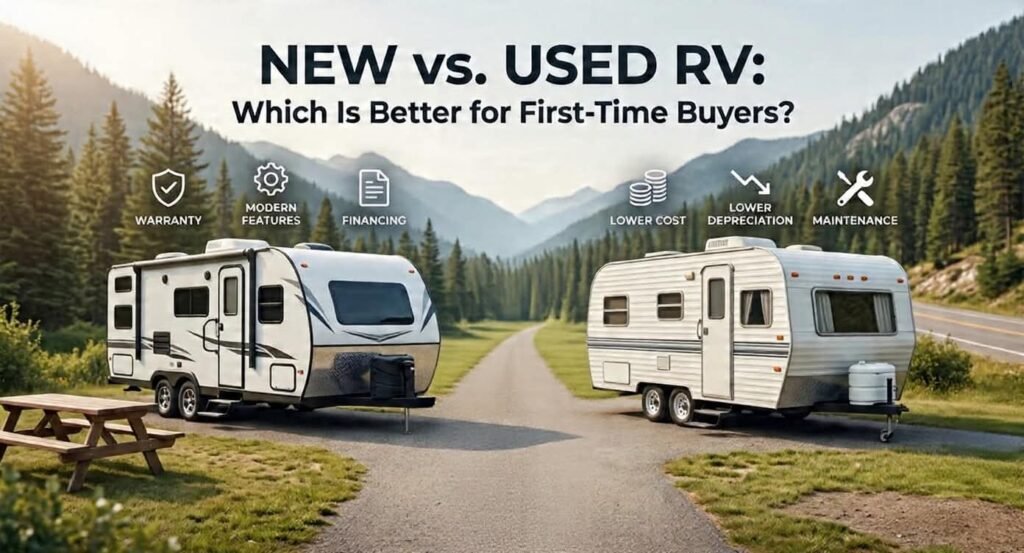
New vs. Used RV: Which Is Better for First-Time Buyers? (2026 Complete Guide)
Buying your first RV is exciting. However, it can also feel overwhelming. With so many RV types, floor plans, and price ranges, it’s easy to wonder where to start. One of the biggest decisions you’ll make is whether to buy a brand-new RV or a used one.
At first glance, a new RV may seem like the obvious choice. After all, it comes with modern features, a factory warranty, and that unmistakable new-RV smell. On the other hand, a used RV can save you thousands of dollars and may offer better overall value if it has been well maintained.
The truth is that there isn’t one perfect answer for everyone. Instead, the right choice depends on your budget, travel goals, maintenance skills, and how often you plan to use your RV.
Before spending anywhere from $20,000 to more than $150,000, it’s worth taking the time to compare both options carefully. A little research today could save you a significant amount of money—and stress—in the future.
In this complete 2026 guide, you’ll learn the key differences between buying a new vs. used RV, including purchase costs, depreciation, financing, insurance, maintenance, and common mistakes first-time buyers often make. By the end, you’ll have the confidence to choose the RV that best fits your lifestyle and travel plans.
Should You Buy a New or Used RV?
If you’re looking for the shortest answer, here it is:
A new RV is often the best choice for buyers who value the latest technology, manufacturer warranties, and the ability to customize their RV from the start. While the purchase price is higher, you’ll likely experience fewer repairs during the first few years of ownership.
In contrast, a used RV is usually the smarter option if your main goal is saving money and avoiding rapid depreciation. A well-maintained used RV can provide excellent value while leaving more room in your budget for travel, campground fees, and upgrades.
Ultimately, neither option is automatically better. The best RV for first-time buyers depends on how you plan to travel, your financial situation, and your comfort level with routine maintenance.
🚐 Quick Tip: If you’re still unsure, consider renting both a new and a used RV before making such a large investment. A weekend trip can teach you more than hours of online research.

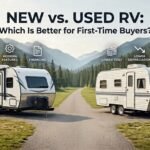
New vs. Used RV Comparison at a Glance
| Feature | New RV | Used RV |
|---|---|---|
| Purchase Price | Higher | Lower |
| Depreciation | Highest during first few years | Much slower |
| Warranty | Usually included | May be expired |
| Maintenance | Fewer repairs initially | Depends on previous care |
| Financing | Easier to qualify | Slightly more restrictive |
| Insurance | Usually costs more | Often lower premiums |
| Technology | Latest features and appliances | Older systems and layouts |
| Customization | Choose colors, options, and upgrades | Limited to existing features |
| Best For | Long-term ownership and peace of mind | Budget-conscious buyers looking for value |
🚐 RV Explorer Journey Tip
Don’t focus only on the purchase price. Many first-time buyers forget to compare long-term costs such as insurance, campground fees, maintenance, and fuel. Sometimes spending a little more upfront on the right RV can save money over the next several years.

What Is the Difference Between a New and Used RV?
Choosing between a new or used RV is one of the biggest decisions you’ll make as a first-time buyer. While both options can provide unforgettable travel experiences, they differ in price, condition, maintenance, and long-term ownership costs.
A new RV is purchased directly from a dealership or manufacturer. It has never been owned before and typically includes the latest technology, modern safety features, and a manufacturer’s warranty. Because everything is brand new, you can expect less wear and tear during the first few years of ownership.
A used RV, on the other hand, has had one or more previous owners. Depending on its age and maintenance history, it may still be in excellent condition while costing significantly less than a comparable new model. However, every used RV is different, which makes a thorough inspection especially important.
It’s also helpful to understand the different types of RVs before making your decision.
Motorhomes
Motorhomes combine both the living space and the vehicle into one unit. They are generally divided into Class A, Class B, and Class C models. Because everything is integrated, maintenance costs can sometimes be higher than with towable RVs.
Travel Trailers
Travel trailers are one of the most popular choices for beginners. Since they can be towed by many SUVs and pickup trucks, they often provide greater flexibility and lower ownership costs.
Fifth Wheels
Fifth wheels offer some of the largest and most comfortable living spaces available. They require a pickup truck equipped with a fifth-wheel hitch, but many full-time RVers appreciate their spacious layouts and residential feel.
Why Age and Mileage Matter
When shopping for a used RV, don’t focus only on the model year.
Instead, consider:
- Overall condition
- Maintenance records
- Water damage
- Roof condition
- Tire age
- Appliance operation
- Engine mileage (for motorhomes)
For example, a well-maintained eight-year-old RV with complete service records may be a much better investment than a newer RV that has been neglected.
🚐 RV Explorer Journey Tip
Instead of asking, “How old is this RV?”, ask “How well has this RV been maintained?” A detailed maintenance history often tells you far more than the model year alone.
New RV Pros and Cons
Buying a new RV offers several advantages, especially if this is your first experience with RV ownership. Nevertheless, it’s important to understand both the benefits and the trade-offs before making such a significant investment.
Advantages of Buying a New RV
Manufacturer Warranty
One of the biggest advantages of buying new is the manufacturer’s warranty. Although warranty coverage varies by brand, it can provide valuable protection against unexpected repair costs during your first years of ownership.
Modern Technology
Today’s RVs include features that weren’t available just a few years ago.
Depending on the model, you may find:
- Solar-ready electrical systems
- Smart control panels
- Energy-efficient appliances
- Backup cameras
- Tire pressure monitoring systems
- USB-C charging stations
- Improved insulation
These upgrades can make traveling more comfortable while helping reduce energy consumption.
Better Energy Efficiency
Many newer RVs are designed with improved insulation, LED lighting, and more efficient heating and cooling systems. As a result, they often consume less power when camping off-grid or staying at RV parks.
If you plan to install portable solar equipment or a power station in the future, newer electrical systems are generally easier to upgrade.
Latest Safety Features
Safety technology continues to improve every year.
Depending on the RV, features may include:
- Lane departure warning
- Collision avoidance systems
- Backup cameras
- Electronic stability control
- Better braking systems
These features can provide additional confidence, especially for first-time RV owners.
Customization Options
Buying new often allows you to choose:
- Interior colors
- Floor plans
- Furniture packages
- Optional equipment
- Solar upgrades
- Entertainment systems
Instead of adapting to someone else’s choices, you can create an RV that matches your travel style.
Disadvantages of Buying a New RV
Higher Purchase Price
New RVs almost always cost more than comparable used models. Depending on the type of RV, the price difference can easily reach tens of thousands of dollars.
Faster Depreciation
Like most vehicles, new RVs lose value quickly during the first few years. Although depreciation varies by manufacturer and model, it’s common for a new RV to experience its largest drop in value soon after purchase.
Higher Insurance Premiums
Because replacement costs are higher, insurance premiums for new RVs are often more expensive than those for older models.
Registration and Taxes
In many states, registration fees and taxes are based on the vehicle’s value. Therefore, purchasing a new RV may increase your upfront ownership costs.
Delivery Delays
If you order a custom RV, you may need to wait several months before taking delivery. While some buyers enjoy customizing every detail, others prefer the convenience of purchasing an RV that’s ready to travel immediately.
🚐 RV Explorer Journey Tip
A new RV offers peace of mind, but don’t assume “new” means “perfect.” Before accepting delivery, complete a thorough pre-delivery inspection and test every appliance, light, water connection, and electrical outlet.
Used RV Pros and Cons
For many first-time buyers, a used RV offers the best balance between affordability and value. However, choosing the right used RV requires careful research and a detailed inspection.
Advantages of Buying a Used RV
Lower Purchase Price
The biggest advantage is simple—you’ll usually spend far less than you would on a new RV. This allows many buyers to purchase a larger or better-equipped RV while staying within budget.
Less Depreciation
Because the first owner has already absorbed most of the initial depreciation, used RVs typically hold their value better than brand-new models.
Lower Insurance Costs
Since the replacement value is lower, insurance premiums are often more affordable. Over several years, these savings can add up.
More Budget for Upgrades
Saving money on the purchase price gives you additional flexibility.
For example, you may have room in your budget for:
- New tires
- Solar panels
- Lithium batteries
- Better mattresses
- Suspension upgrades
- Portable power stations
- Camping accessories
Rather than paying for factory upgrades you may never use, you can invest in features that match your own travel style.
Disadvantages of Buying a Used RV
Unknown Maintenance History
Unless the previous owner kept detailed service records, it can be difficult to know how well the RV has been maintained.
Hidden Water Damage
Water intrusion is one of the most expensive RV problems.
Always inspect:
- Roof seams
- Windows
- Skylights
- Exterior walls
- Bathroom ceilings
- Floor corners
Even small leaks can lead to costly repairs if left unnoticed.
Limited or No Warranty
Many used RVs are sold without a manufacturer’s warranty. While some dealerships offer extended coverage, it’s important to understand exactly what is—and isn’t—included.
Unexpected Repairs
Even well-maintained RVs require ongoing maintenance.
Older RVs may eventually need:
- New tires
- Brake service
- Appliance repairs
- Roof resealing
- Battery replacement
- Plumbing repairs
Setting aside an emergency maintenance fund before you begin traveling can help reduce financial stress.
🚐 RV Explorer Journey Tip
Before buying any used RV, hire an independent NRVIA-certified inspector whenever possible. A professional inspection may cost a few hundred dollars, but it can uncover hidden issues that could save you thousands in future repairs.
Five-Year Ownership Cost Comparison
| Expense | New RV (Average) | Used RV (Average) |
|---|---|---|
| Purchase Price | $85,000 | $45,000 |
| Insurance (5 Years) | $8,000 | $5,500 |
| Routine Maintenance | $4,500 | $7,000 |
| Unexpected Repairs | $2,500 | $9,000 |
| Estimated Depreciation | $22,000 | $8,000 |
| Estimated 5-Year Ownership Cost | $122,000 | $74,500 |
Important: These figures are general estimates based on average RV ownership costs in the United States for 2026. Your actual expenses may be higher or lower depending on the type of RV, its age, mileage, condition, maintenance history, travel frequency, insurance provider, fuel prices, storage fees, and where you camp. Use this comparison as a planning tool rather than an exact prediction of ownership costs.
Quick Takeaway
If your priority is peace of mind, the latest technology, manufacturer warranties, and fewer unexpected repairs, buying a new RV may justify the higher upfront investment. It can be an excellent choice for travelers planning to keep their RV for many years.
On the other hand, if your goal is maximizing value while keeping ownership costs under control, a well-maintained used RV is often the smarter financial decision. Although it may require a more careful inspection and occasional repairs, you’ll likely avoid the steep depreciation that affects new RVs during the first few years of ownership.
🚐 RV Explorer Journey Expert Tip
Based on current ownership costs, depreciation trends, and the experience of many seasoned RV owners, a well-maintained used RV is often the best choice for first-time buyers. However, it should have complete maintenance records, pass a professional pre-purchase inspection, and show no signs of water damage or structural issues.
Although a new RV offers the latest technology and warranty protection, a quality used RV can deliver outstanding value while significantly reducing your upfront costs. As a result, the money you save can be invested in campground memberships, quality camping gear, solar upgrades, safety equipment, or unforgettable road trips.
Understanding the True Cost of RV Ownership
Buying an RV is only the beginning of your investment. While the purchase price often gets the most attention, it’s important to understand the ongoing costs of ownership before making a final decision. Fortunately, planning for these expenses can help you avoid surprises and choose an RV that fits both your travel goals and your budget.
Whether you purchase a brand-new RV or a well-maintained used model, you’ll need to budget for insurance, maintenance, fuel, campground fees, and other recurring expenses. Therefore, comparing the total cost of ownership—not just the purchase price—is one of the smartest decisions a first-time RV buyer can make.
Estimated Five-Year RV Ownership Costs
The table below provides general estimates for a mid-size travel trailer or motorhome. Actual costs will vary depending on the RV type, mileage, travel frequency, location, and maintenance history.
| Expense | New RV | Used RV |
|---|---|---|
| Purchase Price | $85,000 | $50,000 |
| Insurance (5 Years) | $8,500 | $6,000 |
| Routine Maintenance | $4,500 | $7,000 |
| Unexpected Repairs | $2,500 | $8,500 |
| Fuel | $15,000 | $15,000 |
| Registration & Taxes | $4,000 | $2,800 |
| Storage Fees | $3,500 | $3,500 |
| Campground Fees | $8,000 | $8,000 |
| Estimated Depreciation | $25,000 | $10,000 |
| Estimated 5-Year Ownership Cost | Approximately $156,000 | Approximately $110,800 |
Important: These figures are planning estimates based on average U.S. RV ownership costs in 2026. Actual expenses depend on your RV type, travel style, mileage, insurance provider, fuel prices, storage needs, campground choices, and maintenance schedule.
Purchase Price
The purchase price is the largest upfront expense, and it often shapes every other ownership cost. New RVs typically range from $80,000 to well over $150,000 for many motorhomes, while travel trailers generally cost less. By comparison, a well-maintained used RV can often save buyers tens of thousands of dollars without sacrificing comfort or functionality.
However, a lower purchase price shouldn’t be the only deciding factor. A cheaper RV that requires major repairs could end up costing more than a newer model over time. Therefore, always consider the total cost of ownership rather than focusing solely on the sticker price.
Taxes and Registration
Taxes, title fees, and annual registration costs vary by state. In general, these expenses are higher for new RVs because they are based on the vehicle’s purchase value. Used RVs usually cost less to register, making them slightly more affordable during the first few years of ownership.
Before buying, check your local Department of Motor Vehicles (DMV) requirements so you understand the full cost of registration in your state.
Insurance
Insurance is another important expense that many first-time buyers underestimate. Premiums depend on several factors, including the RV’s value, age, type, driving history, storage location, and how often you travel.
Because new RVs have higher replacement values, insurance premiums are generally higher. On the other hand, older RVs often cost less to insure, although comprehensive coverage is still recommended to protect against accidents, theft, storms, and other unexpected events.
Fuel Costs
Fuel is one of the largest ongoing expenses for RV owners, especially for those who enjoy long road trips or full-time travel. Larger Class A motorhomes typically consume significantly more fuel than smaller travel trailers or camper vans.
Although fuel costs remain similar whether you own a new or used RV of the same size, your travel habits will have the biggest impact on your yearly expenses. Planning efficient routes and avoiding unnecessary driving can help reduce fuel costs over time.
Storage Fees
Many homeowners cannot store an RV on their property due to limited space or neighborhood restrictions. As a result, many owners rent storage facilities, especially during the off-season.
Depending on your location and the type of storage you choose, annual costs can range from a few hundred dollars for outdoor storage to several thousand dollars for covered or climate-controlled facilities.
Repairs and Routine Maintenance
Routine maintenance helps prevent expensive repairs and extends the life of your RV. Regular inspections of the roof, tires, brakes, batteries, plumbing, and electrical systems can identify small issues before they become major problems.
New RVs usually require fewer repairs during the first several years because they are covered by manufacturer warranties. In contrast, used RVs often need more maintenance, particularly if previous owners skipped regular servicing. For this reason, reviewing maintenance records before purchasing a used RV is extremely important.
Campground Fees
Accommodation costs vary widely depending on your travel style. Public campgrounds are often the most affordable option, while private RV resorts with premium amenities charge significantly higher nightly rates.
Many experienced RV travelers reduce camping expenses by purchasing campground memberships, taking advantage of weekly or monthly discounts, or mixing campground stays with legal boondocking opportunities where permitted.
🚐 RV Explorer Journey Tip
When comparing a new and used RV, don’t focus solely on the purchase price. Instead, consider the total cost of ownership, including insurance, maintenance, depreciation, fuel, storage, registration, and campground fees. Although a well-maintained used RV often costs less to own over time, a new RV may provide greater peace of mind through warranty coverage, modern technology, and fewer unexpected repairs during the first few years. The best choice depends on your budget, travel style, and long-term ownership goals.
RV Financing Explained: What First-Time Buyers Need to Know
Buying an RV is a significant financial decision, and many first-time buyers choose to finance their purchase instead of paying the full amount upfront. Understanding how RV loans work can help you compare offers, avoid unnecessary costs, and select a financing option that fits your budget.
Although financing makes RV ownership more accessible, it’s important to look beyond the monthly payment. Interest rates, loan terms, your credit score, and the size of your down payment all affect the total amount you’ll pay over the life of the loan. Therefore, taking time to compare financing options can save you thousands of dollars.
Quick Answer
Most lenders offer financing for both new and used RVs. However, new RVs generally qualify for lower interest rates and longer loan terms, while used RV loans may have slightly higher rates depending on the RV’s age, condition, and value. Before signing a loan agreement, compare several lenders and calculate the total cost of borrowing—not just the monthly payment.
New RV vs. Used RV Financing
Whether you choose a new or used RV, financing options are widely available. However, there are some important differences.
New RVs often qualify for lower interest rates because they have a higher resale value and lower lending risk. In addition, lenders may offer repayment terms of up to 15 or even 20 years for qualified buyers, helping reduce monthly payments.
On the other hand, financing a used RV may involve slightly higher interest rates or shorter repayment periods, especially if the RV is older. Even so, because the purchase price is usually much lower, many buyers still spend less overall despite paying a slightly higher interest rate.
Interest Rates
RV loan interest rates vary depending on market conditions, your lender, your credit history, the loan amount, and the age of the RV.
In general:
- Excellent credit often qualifies for the lowest available rates.
- Good credit usually receives competitive financing offers.
- Fair or limited credit may result in higher interest rates or additional lending requirements.
Even a small difference in interest rates can significantly affect the total amount paid over a long-term loan. Therefore, comparing multiple loan offers before making a decision is always worthwhile.
Loan Length
RV loans typically range from 5 to 20 years, depending on the loan amount and the lender’s requirements.
While a longer loan term reduces your monthly payment, it also increases the total interest paid over time. Conversely, a shorter loan usually costs less overall but requires higher monthly payments.
Choosing the right loan term depends on your financial situation and long-term travel plans.
Credit Score Matters
Your credit score is one of the most important factors lenders consider when reviewing an RV loan application.
A higher credit score can help you qualify for:
- Lower interest rates
- Better loan terms
- Higher borrowing limits
- Smaller financing costs over the life of the loan
If your credit score needs improvement, consider paying down existing debt and reviewing your credit report before applying for financing.
How Much Should You Put Down?
Although some lenders offer low- or no-down-payment financing, many financial experts recommend putting 10% to 20% down when purchasing an RV.
A larger down payment can:
- Lower your monthly payment
- Reduce total interest costs
- Improve your loan approval chances
- Help prevent owing more than the RV is worth if values decline
Whenever possible, avoid financing the full purchase price.
When Paying Cash Makes Sense
If you have enough savings without affecting your emergency fund or other financial goals, paying cash can eliminate interest charges entirely. In addition, owning your RV outright means you won’t have monthly loan payments, giving you greater financial flexibility for travel, maintenance, campground fees, and upgrades.
However, financing may still be the right choice if paying cash would leave you without adequate savings for unexpected expenses. Every buyer’s financial situation is different, so choose the option that supports your long-term financial health rather than simply minimizing monthly payments.
🚐 RV Explorer Journey Tip
Before choosing a lender, compare at least three financing offers and focus on the total loan cost, not just the monthly payment. A loan with a slightly higher monthly payment but a shorter repayment term may save you thousands of dollars in interest over time. Also, consider getting pre-approved before visiting a dealership. Pre-approval helps you understand your budget, strengthens your negotiating position, and makes it easier to recognize a competitive financing offer.
Financing Comparison at a Glance
| Feature | New RV | Used RV |
|---|---|---|
| Interest Rates | Usually lower | Usually slightly higher |
| Loan Terms | Up to 15–20 years | Often shorter |
| Down Payment | 10–20% recommended | 10–20% recommended |
| Monthly Payment | Higher purchase price may increase payments | Lower purchase price often reduces payments |
| Overall Borrowing Cost | Lower rate but larger loan amount | Higher rate but smaller loan amount |
| Best For | Buyers wanting the latest features and warranty | Buyers focused on affordability and long-term value |
💰 Money-Saving Tip
The best RV loan isn’t always the one with the lowest monthly payment. Instead, compare interest rates, loan length, down payment requirements, and the total amount you’ll repay. Taking time to understand your financing options can help you make a confident purchase while keeping your long-term ownership costs under control.
RV Depreciation Explained: Why It Matters Before You Buy
One of the biggest differences between buying a new or used RV is depreciation. Although it isn’t an expense you’ll pay out of pocket each month, depreciation can significantly affect your long-term ownership costs and your RV’s resale value.
Simply put, depreciation is the decrease in an RV’s value over time. Like most vehicles, RVs begin losing value as soon as they leave the dealership. However, the rate of depreciation varies depending on the RV’s age, condition, brand, mileage, maintenance history, and market demand.
For first-time buyers, understanding depreciation is essential because it helps you estimate how much your RV may be worth when it’s time to sell or trade it in.
Quick Answer
In general, new RVs lose value much faster during the first few years of ownership, while used RVs depreciate more gradually because the first owner has already absorbed the largest drop in value. As a result, many experienced RV owners consider a well-maintained used RV to be a smarter financial investment.
Estimated RV Depreciation Over Five Years
The table below shows a simplified example of how depreciation may affect a typical RV. Actual resale values vary based on the RV’s condition, maintenance, mileage, and overall market demand.
| Ownership Year | New RV Value | Used RV Value |
|---|---|---|
| Purchase | 100% | 100% |
| Year 1 | 80% | 92% |
| Year 3 | 68% | 82% |
| Year 5 | 58% | 72% |
Note: These percentages are examples based on general depreciation trends. Individual RV values vary by manufacturer, model, condition, mileage, maintenance history, and market demand.
Why Do New RVs Depreciate Faster?
When you purchase a brand-new RV, you’re paying for the latest features, warranty protection, and the peace of mind that comes with being the first owner. However, that value begins to decline as soon as the RV enters the used market.
Just like a new car, the steepest depreciation usually occurs during the first few years. Even if the RV is in excellent condition, buyers are often willing to pay less simply because it is no longer new.
This is one reason many experienced RV owners recommend considering a gently used RV, especially if you’re buying your first one.
Why Depreciation Matters
Depreciation affects much more than resale value.
It can also influence:
- Your overall cost of ownership
- Future trade-in value
- Loan balance versus RV value
- Insurance settlements after a total loss
- Your long-term travel budget
For example, if you finance a new RV with a small down payment, you could owe more on your loan than the RV is worth during the first few years. Understanding depreciation helps you make a more informed financial decision before you buy.
🚐 RV Explorer Journey Tip
Don’t choose an RV based only on today’s purchase price. Instead, think about what it will be worth five years from now. A well-maintained RV from a reputable manufacturer often retains its value better than a lower-quality model, regardless of whether it’s new or used. Before buying, research resale values, owner reviews, and reliability ratings to make a more confident long-term investment.
Depreciation vs. Value: Think Long-Term
Although depreciation is an important financial consideration, it shouldn’t be the only factor when choosing an RV. If you plan to keep your RV for many years, create lasting memories, and travel frequently, the enjoyment and flexibility it provides may outweigh the loss in resale value.
The best decision is one that balances your budget, travel goals, expected ownership period, and long-term financial plans. By understanding how depreciation works, you’ll be better prepared to choose an RV that delivers both value and unforgettable adventures.
RV Maintenance Expectations: What Every First-Time Buyer Should Know
Owning an RV is rewarding, but it also comes with ongoing maintenance. Unlike a traditional car, an RV combines a vehicle with many of the systems found in a home. That means you’ll need to care for the engine (if you own a motorhome), plumbing, electrical system, roof, appliances, and living space.
Fortunately, regular maintenance doesn’t have to be difficult. By following a routine inspection schedule and fixing small problems early, you can avoid many expensive repairs and enjoy years of reliable travel.
The good news is that most maintenance tasks can be completed with basic tools and a little planning.
Quick Answer
Whether you buy a new or used RV, regular maintenance is essential. Checking your tires, roof, seals, batteries, appliances, and water system can help prevent costly repairs and extend the life of your RV. Preventive maintenance is almost always less expensive than waiting for something to fail.
Tires
Your RV’s tires are one of its most important safety features. Even if they have plenty of tread, RV tires can deteriorate from age, sunlight, and long periods of storage.
Before every trip, check:
- Tire pressure
- Tread wear
- Sidewall cracks
- Tire age
Many RV experts recommend replacing tires every five to seven years, even if they appear to be in good condition. Driving on old tires increases the risk of a dangerous blowout.
Roof and Exterior Seals
Water is one of the biggest threats to any RV.
Over time, roof sealant can crack due to sun exposure and changing weather conditions. Even a small opening can allow water to enter the walls or ceiling, leading to expensive structural damage.
Inspect your roof and exterior seals several times each year, especially before long trips. Resealing small cracks early is much easier—and far less expensive—than repairing water damage later.
Water Damage
If there’s one thing every first-time buyer should learn, it’s this:
Water damage is often the most expensive RV repair.
Always inspect:
- Ceiling corners
- Windows
- Skylights
- Bathroom walls
- Floor edges
- Storage compartments
Soft flooring, stains, mold, or musty odors may indicate hidden leaks. If you’re buying a used RV, a professional inspection can help identify moisture problems before you commit to the purchase.
Batteries and Electrical System
Your RV depends on a healthy battery system to power lights, water pumps, appliances, and other essential equipment.
Check battery terminals regularly for corrosion, monitor battery voltage, and replace aging batteries before they fail unexpectedly.
If you plan to camp off-grid, upgrading to lithium batteries and adding a portable solar power station, such as an ALLPOWERS system, can improve energy efficiency and provide more reliable power while reducing generator use.
Generator and Power Systems
If your RV includes a generator, regular servicing is essential for dependable performance.
Follow the manufacturer’s maintenance schedule and check:
- Oil levels
- Air filters
- Fuel system
- Cooling vents
Many RV owners also carry a portable power station as a backup for charging electronics or running small appliances when a generator isn’t practical.
Slide-Outs and Moving Components
Slide-outs create additional living space, but they also require regular maintenance.
Keep slide mechanisms clean, inspect rubber seals, and lubricate moving parts according to the manufacturer’s recommendations.
Ignoring small issues can eventually lead to leaks, alignment problems, or costly mechanical repairs.
Appliances
Most RVs include several appliances, such as a refrigerator, water heater, furnace, air conditioner, microwave, and stove.
Test these systems before every major trip to make sure they’re operating correctly. Catching a small issue before you leave home is much easier than dealing with a broken refrigerator in the middle of a camping trip.
🚐 RV Explorer Journey Tip
Create a simple seasonal maintenance checklist and inspect your RV at least twice a year—once before the camping season and again before winter storage. Regular inspections take only a little time but can prevent thousands of dollars in repairs. If you enjoy boondocking, keeping your batteries charged with portable solar equipment and monitoring your power usage will also help extend the life of your electrical system.
Preventive Maintenance Saves Money
Routine maintenance isn’t just about preventing breakdowns—it’s also one of the best ways to protect your investment. A well-maintained RV is generally safer to drive, more enjoyable to own, and often retains its resale value better than one with neglected maintenance.
Whether you purchase a brand-new RV or a used model, developing good maintenance habits from the beginning will help you spend less time dealing with repairs and more time enjoying the open road.
Biggest Mistakes First-Time RV Buyers Make (And How to Avoid Them)
Buying your first RV is exciting. However, it’s also easy to let emotions take over. Many first-time buyers focus on the floor plan, appearance, or price while overlooking important details that can affect their budget and travel experience for years.
The good news is that most of these mistakes are preventable. By taking your time, asking the right questions, and planning ahead, you can make a confident decision and enjoy your RV adventures with fewer surprises.
Quick Answer
The most common mistakes first-time RV buyers make include purchasing an RV that’s too large, skipping a professional inspection, ignoring the RV’s weight limits, underestimating maintenance costs, and buying based on emotion instead of long-term needs. Careful planning before you buy can save you thousands of dollars and prevent unnecessary stress.
1. Buying an RV That’s Too Large
Many beginners assume that bigger is always better. While extra living space can be appealing, a larger RV often comes with higher fuel costs, increased maintenance, higher campground fees, and more challenging driving conditions.
Instead, think about how you’ll actually use your RV. A smaller, easier-to-manage model may provide everything you need while making travel much less stressful.
2. Skipping a Professional Inspection
This is one of the most expensive mistakes you can make when purchasing a used RV.
Although an RV may look clean on the outside, hidden issues such as water damage, roof leaks, electrical problems, or failing appliances can cost thousands of dollars to repair.
Whenever possible, schedule a professional pre-purchase inspection before completing the sale. The inspection fee is small compared to the cost of unexpected repairs.
3. Ignoring Weight Limits and Payload Capacity
Many first-time buyers focus only on sleeping space and storage. However, they often overlook one critical number: payload capacity.
Every RV has a maximum weight limit that includes passengers, water, propane, food, clothing, camping gear, and accessories.
Exceeding these limits can affect handling, braking, tire wear, and overall safety. Before buying, make sure the RV can safely carry everything you plan to bring.
4. Underestimating Ownership Costs
The purchase price is only part of the total cost of owning an RV.
You’ll also need to budget for:
- Insurance
- Registration
- Maintenance
- Repairs
- Fuel
- Campground fees
- Storage
- Internet service
Planning for these ongoing expenses will help you avoid financial surprises and enjoy your travels with greater peace of mind.
5. Buying Emotionally Instead of Practically
It’s easy to fall in love with a beautiful interior or luxury features. However, your decision should be based on how you plan to travel.
Ask yourself:
- Will you travel on weekends or full-time?
- How many people will travel with you?
- Do you plan to stay in campgrounds or boondock?
- Will you work remotely from your RV?
Answering these questions first will help you choose an RV that fits your lifestyle rather than one that simply looks impressive.
6. Skipping the Test Drive
If you’re buying a motorhome, never purchase it without driving it first.
During the test drive, pay attention to:
- Visibility
- Steering
- Braking
- Turning radius
- Driving comfort
- Noise levels
If you’re buying a travel trailer or fifth wheel, confirm that your tow vehicle can safely handle the trailer’s weight and practice towing before taking your first long trip.
7. Forgetting About Campground Restrictions
Not every campground can accommodate every RV.
Some parks have:
- Maximum RV length limits
- Weight restrictions
- Limited hookups
- Narrow roads
- Low tree branches
Before purchasing a large RV, research the types of campgrounds you plan to visit most often. Choosing an RV that fits a wider variety of campgrounds gives you more flexibility when planning future trips.
.
🚐 Beginner RV Buying Checklist
Before signing the paperwork, make sure you can check off each of these items:
✅ Set a realistic budget.
✅ Decide which type of RV fits your travel style.
✅ Compare new and used RV models.
✅ Get insurance quotes before buying.
✅ Schedule a professional inspection.
✅ Check carefully for water damage.
✅ Review all maintenance records.
✅ Take a test drive or towing test.
✅ Verify your tow vehicle’s towing capacity and payload limits.
✅ Calculate your yearly ownership costs.
✅ Read owner reviews and reliability ratings.
🚐 RV Explorer Journey Tip
Don’t rush your decision. Visit several dealerships, attend local RV shows, rent different RV types, and compare multiple models before making a purchase. Spending a little more time researching today can save you thousands of dollars—and help you choose an RV you’ll enjoy for years to come.
Common Mistakes at a Glance
| Mistake | Why It’s a Problem | How to Avoid It |
|---|---|---|
| Buying an RV that’s too large | Higher costs and more difficult to drive | Choose a size that matches your travel style |
| Skipping a professional inspection | Hidden repairs can be expensive | Hire a certified RV inspector |
| Ignoring payload capacity | Safety risks and excessive wear | Check the manufacturer’s weight ratings |
| Underestimating ownership costs | Budget problems later | Calculate total yearly expenses |
| Buying based on emotion | May not fit your long-term needs | Focus on functionality and travel goals |
| Skipping the test drive | Unexpected driving issues | Drive or tow the RV before purchasing |
| Ignoring campground restrictions | Limits where you can travel | Research campground size requirements |
Final Thoughts: Choosing the Right RV for Your Journey
Buying your first RV is a significant investment, but it doesn’t have to feel overwhelming. Rather than focusing only on the purchase price, consider the total cost of ownership, including insurance, maintenance, financing, fuel, storage, campground fees, and depreciation. Looking at the bigger picture will help you make a more confident and informed decision.
Whether you choose a new or used RV, the best option is the one that matches your budget, travel style, and long-term goals. For some buyers, the peace of mind of a new RV and its warranty is worth the higher upfront cost. For others, a well-maintained used RV offers outstanding value while leaving more room in the budget for adventures.
At the end of the day, the best RV isn’t necessarily the newest or the most expensive—it’s the one that allows you to travel safely, comfortably, and confidently while creating unforgettable memories on the open road.
Take your time, compare your options carefully, ask questions, and never skip a professional inspection. A little extra research today can save you thousands of dollars and help ensure that your first RV experience is one you’ll enjoy for years to come.
Frequently Asked Questions
Is it better to buy a new or used RV for a first purchase?
For most first-time buyers, a well-maintained used RV often provides better overall value. A used RV has already experienced most of its depreciation, typically costs less to insure, and allows you to spend more of your budget on travel and upgrades. However, every used RV should undergo a professional pre-purchase inspection before you buy it.
How much does a new RV cost in 2026?
The price of a new RV depends on the type and features. Entry-level travel trailers typically start around $15,000–$30,000, while Class C motorhomes usually begin around $80,000. Luxury Class A motorhomes can easily exceed $150,000. Always compare several models and include ownership costs in your budget.
What should I inspect before buying a used RV?
Before purchasing a used RV, inspect the roof, walls, flooring, tires, brakes, plumbing, electrical systems, appliances, and slide-outs. Most importantly, check for signs of water damage, mold, or structural issues. Hiring a certified RV inspector can help you avoid expensive repairs later.
Do new RVs lose value quickly?
Yes. Like most vehicles, new RVs experience their greatest depreciation during the first few years of ownership. Depending on the model and market conditions, a new RV may lose a significant portion of its value shortly after purchase. A used RV has already gone through much of this depreciation.
Is financing easier for a new RV?
Generally, yes. Lenders often offer lower interest rates and longer repayment terms for new RVs. Financing a used RV may still be possible, but approval often depends on the vehicle’s age, condition, and value.
Are used RVs more expensive to maintain?
Not always. A well-maintained used RV can be very reliable. However, older RVs are more likely to require repairs, replacement parts, or appliance upgrades. Reviewing maintenance records and obtaining a professional inspection can significantly reduce these risks.
Ready To Get Started
Still planning your first RV adventure? Continue reading these beginner-friendly guides:
- Hidden Costs of RV Ownership Nobody Tells You About (2026)
- First RV Trip Checklist: Everything You Need Before You Leave Home
- How Much Does It Really Cost to Own an RV?

Melinda Szekeres, is the founder of RV Explorer Journey, a resource dedicated to helping RV travelers explore the open road with confidence. Through extensive research and a passion for the RV lifestyle, Melinda curates honest gear reviews, campsite guides, solar power tips, and money-saving travel advice to help both beginners and seasoned road trippers plan their perfect adventure.