Starlink Mini for RV Camping: Is It Worth It in 2026?
Why Staying Connected on the Road Matters
Few things beat parking the RV somewhere quiet, away from the crowds. The catch? Campground Wi-Fi can be painfully slow, and cell service has a way of vanishing right when you find that perfect secluded spot.
Starlink Mini is one way around that. It’s a compact satellite internet system that can keep you connected for remote work, trip planning, or video calls home, as long as you have a clear view of the sky. But between the equipment costs and monthly fees, is it actually worth it for RV life in 2026?
RV Explorer Journey Tip:
Before investing in satellite internet, think about where you actually camp. If you usually have reliable cell service, a mobile hotspot might be enough. But if you love finding quiet, off-grid spots, Starlink Mini could be worth considering.
What Is Starlink Mini, and How Does It Work for RV Camping?
Last updated: October 2026
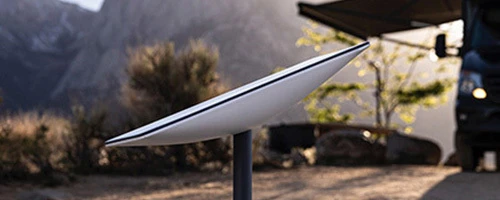
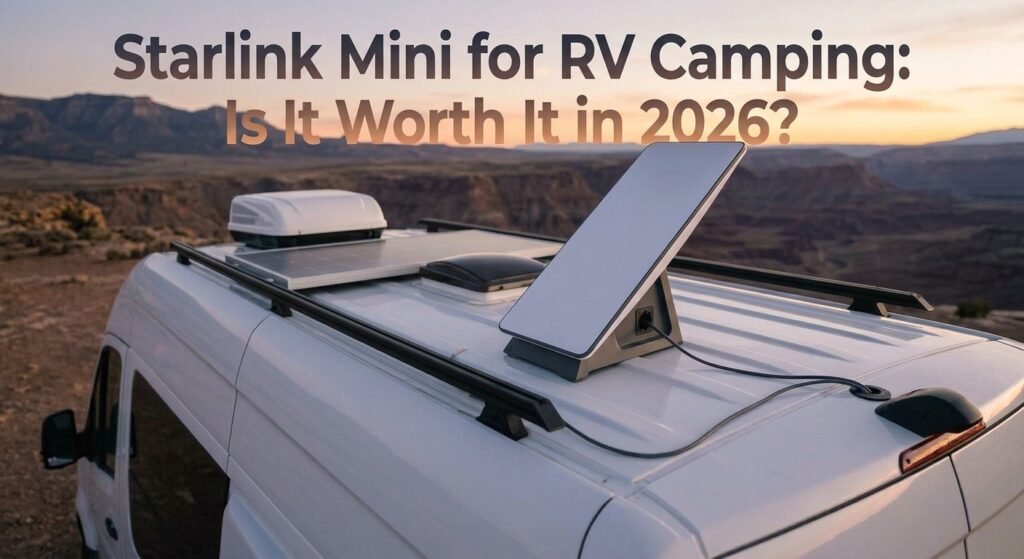
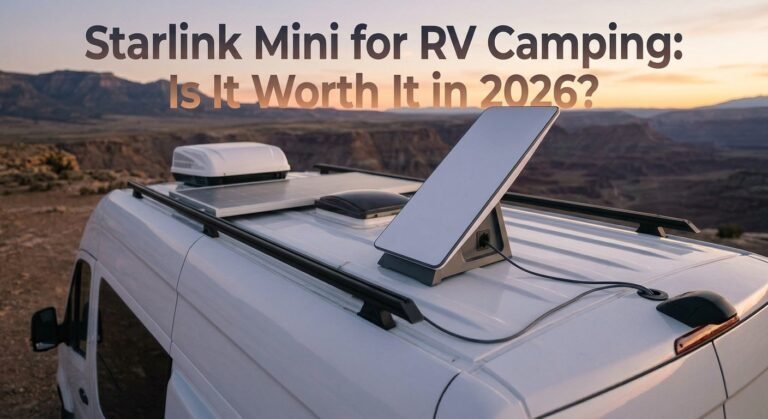
Starlink Mini is a portable satellite internet system that gets you online without relying on spotty campground Wi-Fi or nearby cell towers. It connects to Starlink’s low-Earth-orbit satellites overhead, so it can work in remote spots where cell coverage is weak or missing.
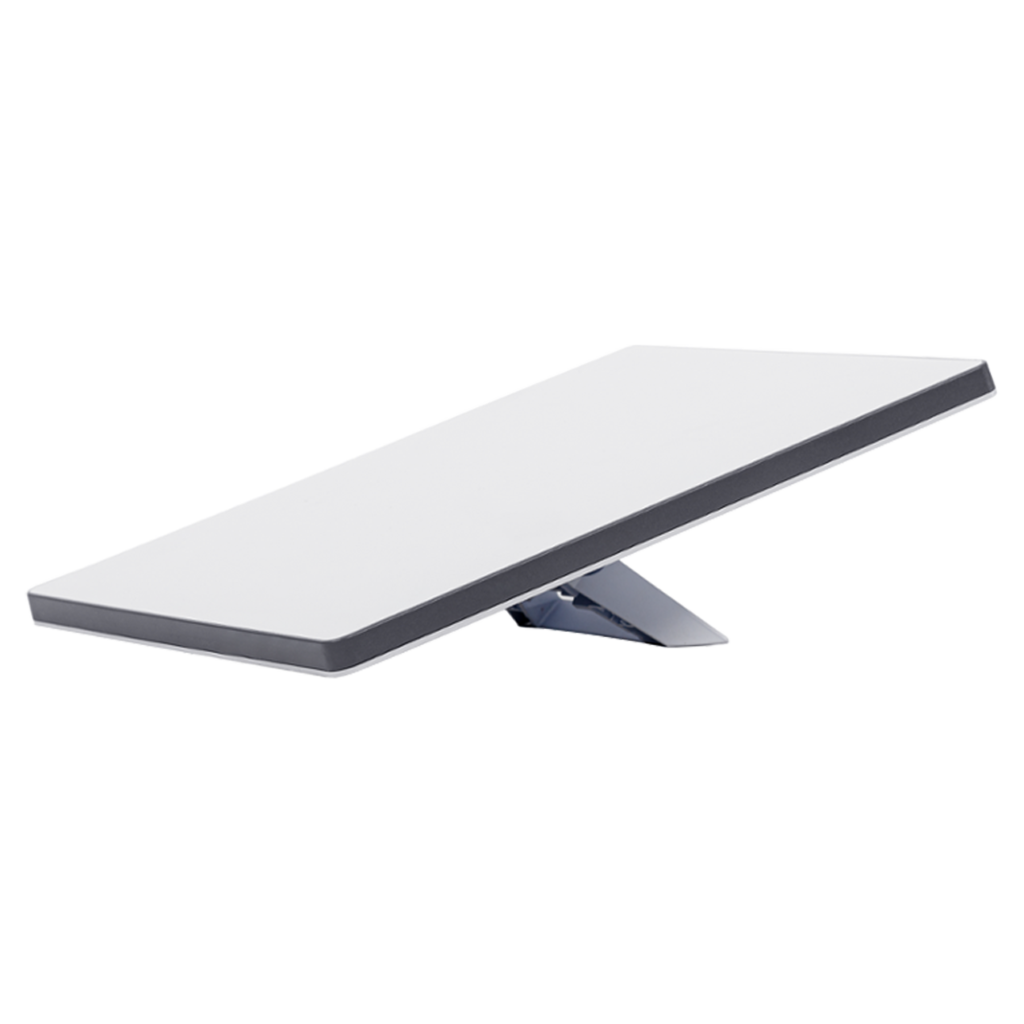
One of its biggest perks for RV travelers is its size. The dish weighs about 2.4 pounds (1.1 kg) and measures roughly 11.75 x 10.2 x 1.45 inches, and the Wi-Fi router is built right in. It slips into a backpack, so there’s no bulky equipment to haul around.
Power use is modest too. Starlink lists an average draw of 25 to 40 watts, which matters if you’re running it from a battery or inverter instead of a campground hookup.
RV Explorer Journey Tip:
The main thing to keep in mind? Starlink Mini needs a clear view of the sky. Tall trees, steep canyons, or dense shade can interrupt your signal, even at an otherwise perfect campsite.
How Much Does Starlink Mini Cost in 2026?
|
Item |
Cost |
|
Starlink Mini hardware |
$149 one-time (or about $12.41/month for 12 months) |
|
Roam 100GB |
$55/month |
|
Roam 300GB |
$80/month |
|
Roam Unlimited |
$175/month |
|
Optional mounts or power accessories |
Varies by setup |
Before adding Starlink Mini to your RV setup, it’s worth looking beyond the price of the dish.
You’ll pay for the equipment upfront, plus a monthly subscription to stay connected.
Here’s a quick breakdown of current costs for U.S. RV travelers:
The dish has gotten much cheaper since it launched at $599, so the monthly plan is now the bigger long-term cost. The good news? Starlink also offers a Standby Mode, so you don’t necessarily have to pay for a full Roam plan during months when your RV is parked at home.
For occasional weekend trips, a smaller data plan might be enough. But if you’re working remotely or streaming regularly, think about how much data you actually use before choosing a tier.
Prices checked October 2026. Starlink changes plans and runs promotions often, so confirm current pricing on Starlink’s official website before you buy.
Is Starlink Mini Easy to Set Up at a Campsite?
Setting up Starlink Mini at your campsite is pretty straightforward. You don’t need to be a tech expert or spend half your afternoon figuring out cables. Here’s the basic process:
- Check for open sky. Before you set anything down, open the Starlink app and use its obstruction checker to look for overhanging branches, tall trees, or canyon walls.
- Set up the dish and connect power. Place the dish on its kickstand and plug it into a compatible power source, such as your RV’s AC outlet or a portable power station. Check Starlink’s power requirements first, since 12V and USB-C sources need the right cable.
- Adjust the dish if needed. The app will tell you if the dish needs to be turned or tilted for a better view of the sky.
- Connect to Wi-Fi. The router is built into the dish, so join the Starlink network from your phone or laptop, then follow the app’s prompts to name your network and set a password.
RV Explorer Journey Tip:
The biggest challenge? Finding enough open sky, especially at heavily wooded campsites. A long power cable or a portable power station lets you set the dish up in a clearing, away from your rig.
Can You Run Starlink Mini on RV Solar Power?
Yes, you can run Starlink Mini on RV solar power, as long as your battery and solar setup can handle it. That’s good news if you enjoy boondocking without relying on campground hookups.
Starlink Mini typically uses around 25 to 40 watts. Run it for eight hours, and that’s roughly 200 to 320 watt-hours (Wh) of electricity. In simple terms, that’s the energy your solar panels need to replace to keep your battery charged.
The catch? Solar panels only produce power when the sun is out, so you’ll need enough battery storage for cloudy days and nighttime, plus a compatible power connection.
A few ways to stretch your power:
- Use the sleep schedule. If you don’t need internet overnight, the Starlink app lets you put the dish to sleep on a schedule.
- Turn off snow melt in warm weather. You’ll find it under Settings, then Starlink, then Snow Melt. In cold, snowy conditions, leave it on automatic.
- Power it directly from DC when you can. Skipping the inverter avoids conversion losses, but check that your cable and power source are compatible with the Mini first.
For a closer look at planning your setup, check out our Starlink and RV solar power guide.
Starlink Mini vs. Standard: Which Is Better for RV Travel?
Both Starlink Mini and Standard can keep you connected on the road, but they suit different kinds of trips.
For RV travelers, the biggest differences are size and power use. Starlink Mini is easier to pack and uses less electricity, which makes it appealing for boondocking or smaller RV setups. The Standard dish covers more Wi-Fi space and is better suited to heavier internet use.
Here’s how they compare:
|
Feature |
Starlink Mini |
Starlink Standard |
|
Portability |
Compact, about 2.4 lbs; built-in router; fits in a backpack |
Larger dish with a separate router; takes more storage space |
|
Power use |
25-40 watts average |
Roughly 50-100 watts, depending on the model* |
|
Wi-Fi coverage |
Up to about 1,200 sq. ft. |
Up to about 3,200 sq. ft.* |
|
Best for |
Solo travelers, weekend trips, boondocking, smaller RVs |
Full-time RV living, multiple users, heavier internet needs |
*Standard figures vary by model and conditions. Check Starlink’s website for current specs.
If you’re camping off-grid and watching every watt your battery uses, the Mini is probably the more practical choice. It’s compact, easy to move between campsites, and doesn’t need as much power.
If you’re traveling with family, need Wi-Fi coverage across a larger area, or have several people using the connection regularly, the Standard may be worth the extra space and power consumption.
RV Explorer Journey Tip:
For most weekend campers and boondockers, though, the Mini is the easier place to start.
Another Option for Staying Connected
If you’re looking at different ways to stay connected while traveling, Winegard is another name worth knowing. It offers RV connectivity equipment, including options that work with Starlink.
Before buying anything, I’d compare the equipment, installation requirements, and monthly costs. What works for someone living in their RV full-time might be more than a weekend camper actually needs.
Is Starlink Mini Worth It for Your RV?
So, is Starlink Mini worth it for RV camping? It really depends on where you travel and how often you need to stay connected.
If you love boondocking in remote areas, work from your RV, or regularly camp where cell service is unreliable, Starlink Mini could be a worthwhile investment. Having another way to get online can make longer trips a lot easier, especially when you need to check maps, send emails, or stay in touch with family.
But not every RVer needs satellite internet. If you mostly stay at campgrounds with decent Wi-Fi or travel through areas with reliable cell coverage, a mobile hotspot might do the job for less money. With Roam plans starting at $55 a month, it’s worth comparing that against what you’d pay otherwise.
In the end, it comes down to how often you’ll actually use it. Starlink Mini makes the most sense when staying connected matters and your usual options aren’t reliable.
Frequently Asked Questions
Does Starlink Mini work without cell service?
Yes. Starlink Mini connects to satellites instead of cell towers or campground Wi-Fi, so it can work in remote spots where cell coverage is weak or missing. You’ll still need an active service plan, a power source, and a clear view of the sky.
Can you use Starlink Mini while driving?
Yes, if your Starlink service plan permits in-motion use and the dish is installed with a suitable, securely attached mount. Check Starlink‘s current speed limits and plan restrictions before traveling.
Do you need a monthly subscription?
Yes. Buying the dish only covers the equipment, and it doesn’t include ongoing internet access. You’ll need an active Starlink service plan, such as Roam, to get online. If you only travel seasonally, check whether your plan allows pausing or switching to paid Standby Mode during the off-season.
Ready To Get Started
So, Is Starlink Mini Really Worth It?
Starlink Mini can make staying connected on the road a whole lot easier especially if you love boondocking or camping far beyond where cell service reaches. But that doesn’t mean every RVer needs one.
If you mostly stay at resort campgrounds with dependable Wi-Fi or travel along major corridors with reliable cell coverage, you’ll likely be better off saving your money. Before buying, take a close look at where you usually camp, how essential high-speed internet is to your daily routine, and whether the monthly plan fits neatly into your travel budget.
At the end of the day, if your usual spots already have decent signal, a basic mobile hotspot or cellular router might be all you really need.
Keep Exploring with RV Explorer Journey 🚐
Planning your next RV adventure? There’s always something new to learn before hitting the road!
More RV Camping Tips: Discover how to avoid seven costly mistakes when booking your first campsite in our guest article published on RVUSA.
Planning a Winter Getaway? Check out our guide to Florida RV camping in winter for warm-weather destinations and practical travel tips.
Happy travels, and see you on the road! 🏕️
Melinda Szekeres, is the founder of RV Explorer Journey, a resource dedicated to helping RV travelers explore the open road with confidence. Through extensive research and a passion for the RV lifestyle, Melinda curates honest gear reviews, campsite guides, solar power tips, and money-saving travel advice to help both beginners and seasoned road trippers plan their perfect adventure.